May 8, 2026
Power Problems After a Storm: When to Call a Level 2 Electrician
When a severe storm hits an area, the damage it leaves behind is not always obvious. Fallen branches can pull down service lines, water can enter outdoor switchboards and sudden surges can quietly affect the wiring that keeps a home or business running. In the middle of the cleanup, it can be difficult to determine what is safe to handle and when specialist support is required from a Level 2 electrician in Wollongong.
Allround Electrical explains how to recognise common electrical issues after a storm, what separates a Level 2 electrician from a standard electrician, and which situations require accredited Level 2 work. This article also highlights the risks of attempting resets without proper assessment and why timely professional work is important for preventing further damage.
Power Problems After a Storm Are Not Always Simple Faults
Power issues after a storm can look like minor inconveniences, such as a few dead power points or flickering lights. However, they can also signal more serious damage within the electrical system that is not visible from the outside. Treating every post-storm issue as a simple tripped safety switch can leave serious hazards undetected.
Understanding why storm-related faults are complex helps determine when basic checks are enough and when a Level 2 electrician is needed to safely investigate supply cables, switchboards and connections to the street network.
Hidden Damage Behind “Small” Symptoms
Storms often combine water, wind, debris and power fluctuations. This mix can create damage that only shows up as small symptoms at first.
Flickering lights may be caused by:
- Loose or water-affected connections in the meter box
- Partial damage to overhead service lines
- Failing neutral connections at the point of attachment
Similarly, a single dead circuit could be the result of:
- Water ingress into underground consumer mains
- Heat damage to cabling from repeated short circuits
- Impact damage where branches have strained overhead cables
These issues are not visible without testing and inspection. Resetting a circuit breaker without understanding why it tripped can allow a fault to worsen or keep a shock or fire risk in place.
When the Problem Is Outside the Switchboard
After a storm, many people check the switchboard first. If breakers or safety switches have not tripped, or they keep tripping after being reset, the fault may sit upstream of the normal household wiring.
Some supply-side problems to be aware of include:
- Damaged overhead service lines from the street to the house
- Pulled or cracked point-of-attachment fittings on the fascia
- Water-damaged meters or service fuses
- Loose or corroded neutral connections causing brownouts or overvoltage
These issues involve parts of the electrical system that require authorised Level 2 work. Attempting to tighten fittings, open sealed equipment or interfere with service connections is both illegal and highly dangerous.
The Compounding Effect of Water and Electricity
Water intrusion is one of the most misunderstood storm-related hazards. Equipment may appear to dry out and work normally for a while, yet corrosion and residue can develop over days or weeks.
Power problems linked to water may show up as:
- Intermittent tripping when the humidity is high
- Buzzing or crackling from fittings or the switchboard
- Rust stains or condensation inside meter boxes or around conduits
Recognising that storm-related power issues are often layered and hidden is essential. If damage is present near the point of attachment, service lines, meter or consumer mains, the situation has moved beyond a simple household fault and requires prompt professional attention.
Common Storm-Related Electrical Issues Around the Property
Severe weather can affect far more than the power points inside the home. Storms often damage supply points, outdoor wiring and equipment around the property long before issues appear at a switchboard or appliance. Recognising these problems early helps reduce the risk of electric shock, fire and further damage to the electrical system.
The main storm-related issues around a property involve physical damage to wiring and fittings, water intrusion into electrical components and faults in overhead service lines that connect the home to the street network. Many of these situations call for a licensed Level 2 electrician rather than a general electrician.
Damaged Overhead Service Lines and Connection Points
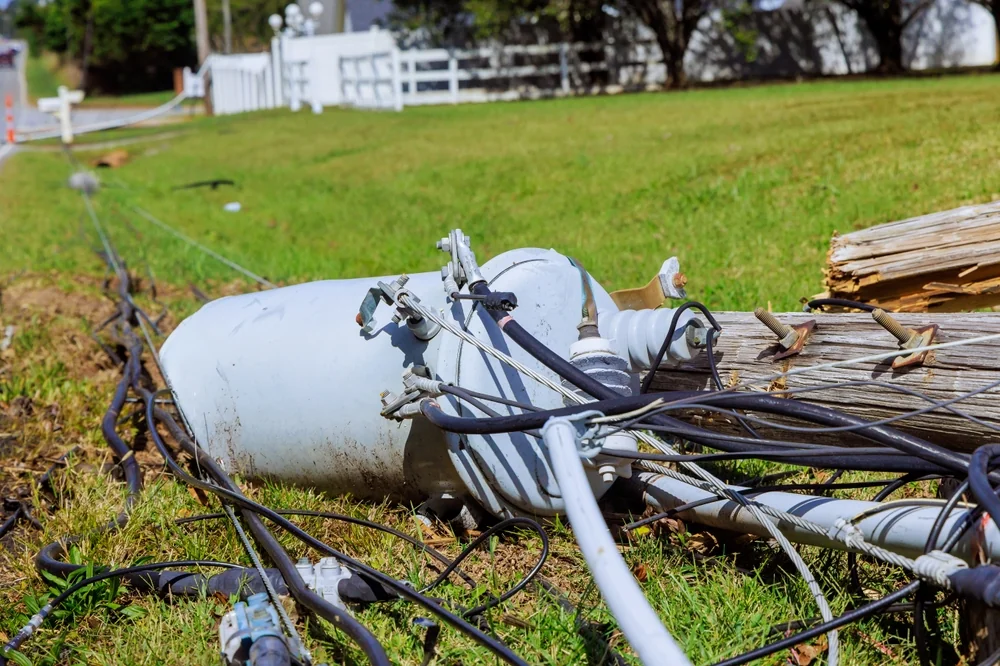
High winds, falling branches and flying debris can damage the overhead service line from the street to the property. Common signs include sagging or low-hanging cables, frayed or twisted conductors and visible damage at the point of attachment on the fascia or roof.
Any line on the ground, caught in trees or hanging lower than usual must be treated as live. No one should attempt to move it or cut nearby branches. The attachment point where cables meet the building can also crack or pull away from the structure. This can allow water into terminations or create loose connections that cause arcing and intermittent power loss.
Water Ingress in External Switchboards and Meter Boxes
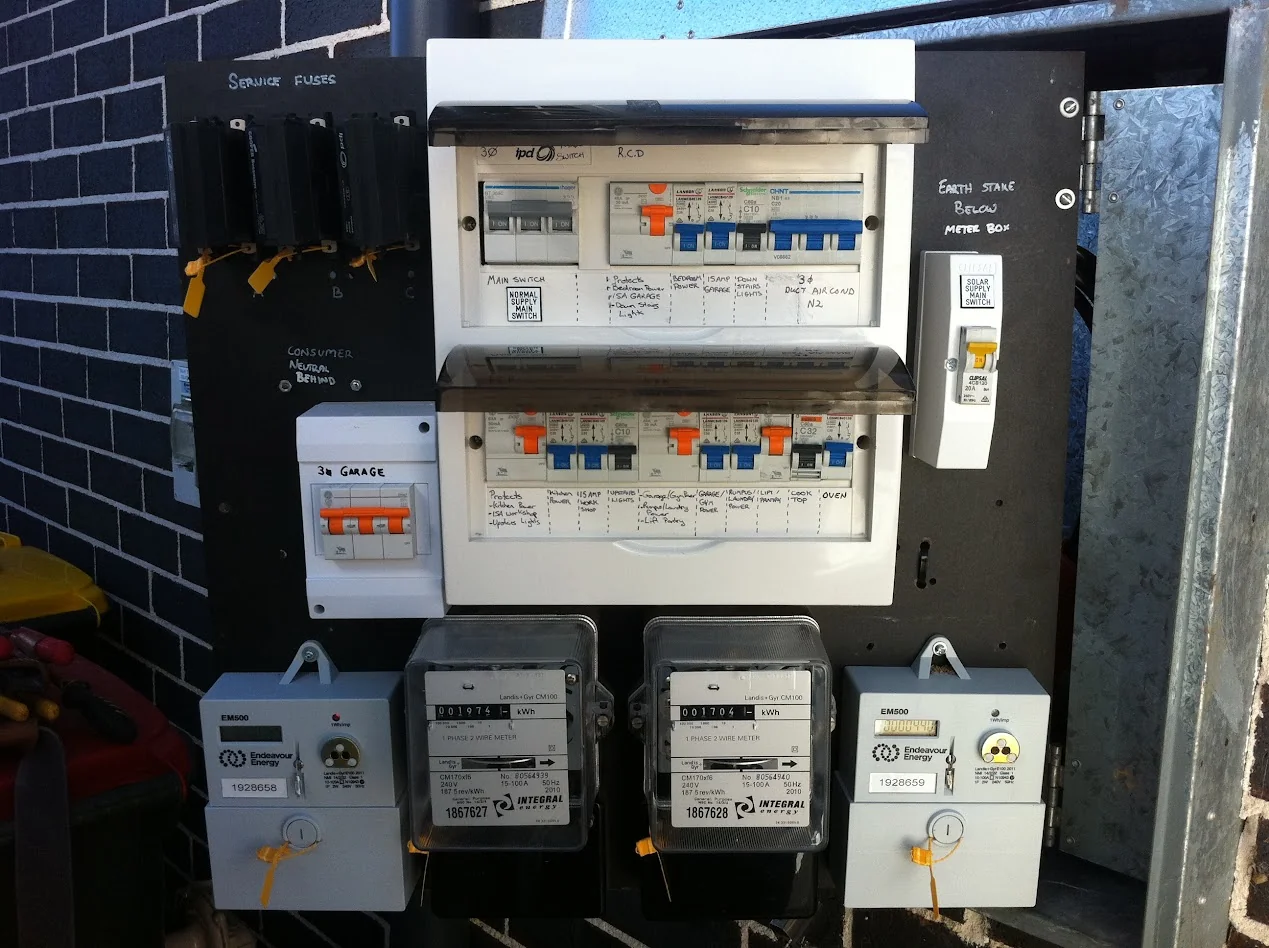
Storm-driven rain can force water into outdoor switchboards, meter boxes and service enclosures, especially if doors are not sealed or panels are corroded. Even small amounts of moisture can track across live components and cause nuisance tripping, buzzing sounds or burning smells.
Rust stains, swollen timber around the box, condensation on the inside of covers or signs of past water marks suggest the enclosure is no longer weatherproof. After a storm, if breakers will not reset or trip again immediately, there may be moisture inside that requires inspection rather than repeated attempts to restore power.
Where water has entered around the service fuse, neutral link or main incoming cables, only a Level 2 electrician can lawfully and safely isolate and repair this equipment. Drying the box with heaters or fans should not be attempted while power is connected, as this can increase the risk of shock or fire.
Outdoor Circuits, Lighting and Garden Power Points
External lighting circuits, garden power points and pool or spa equipment are highly exposed during storms. Waterlogged fittings, cracked light covers and damaged flex leads are common after heavy rain or hail. Residual current devices may trip when moisture enters outdoor outlets and can continue to trip until the fault is removed.
Any outlet or fitting that has been submerged or clearly filled with water should be left switched off at both the device and the main switch if possible. Covers that no longer close properly, broken conduit and exposed cables need prompt attention before the area is used again.
If outdoor issues appear to be linked to the main incoming supply, a Level 2 electrician may be required to check for upstream faults at the service point rather than only replacing local fittings. This may be the case if loss of garden power coincides with flickering lights, partial power loss or irregular voltage throughout the property.
When Storm Damage Needs a Level 2 Electrician
After a major storm, it can be difficult to know whether to wait for the power to come back or call in specialist help. Some issues are as simple as a tripped safety switch. Others involve damage to the supply network, consumer mains or metering equipment that only a Level 2 electrician is authorised to repair.
If storm damage affects overhead lines, service cables, the switchboard connection or metering equipment, a standard electrician cannot legally complete the work. In many cases, the network provider will also require Level 2 attendance before power can be safely restored.
Visible Damage to Service Lines or Power Poles
Any visible damage to the power supply to a property after a storm is a clear signal to involve a Level 2 electrician. Typical signs include fallen or sagging overhead service cables from the street to the building, lines rubbing on roofs or gutters and tree branches resting on or tangled in power lines.
Damage to a private power pole on the property also requires Level 2 attendance. Indicators include leaning or cracked poles, loose stay wires and broken insulators. Even if the pole is still standing, storm movement can loosen connections at the top of the pole or at the point where the cable enters the building. These connection points sit within the Level 2 scope and must be assessed by an authorised professional.
Complete Disconnection, Temporary Builders Supply or Reconnection
Significant storm damage can make a building unsafe to energise until repairs are completed. A Level 2 electrician may be required to arrange an emergency disconnection at the point of supply, install a temporary builders supply for restoration works or reconnect the premises to the network once repairs are complete.
Where the network provider has removed fuses or disconnected the service line for safety, a Level 2 electrician must carry out and certify the required remedial work before power can be legally restored. This may include upgrading damaged consumer mains, relocating unsafe points of attachment and ensuring clearances from roofs and structures meet current requirements.
What to Do If Power Problems Continue After a Storm
Ongoing power issues after a storm can point to hidden damage that is not obvious at first glance. Intermittent power loss, tripping safety switches or partial blackouts can indicate faults that require more than a simple reset. Knowing what to check yourself and when to call a Level 2 electrician helps protect both safety and property.
Before assuming a major fault, rule out simple causes such as a tripped safety switch or a localised power company outage. If problems continue after basic checks, storm damage may have affected supply equipment or internal wiring.
Step 1: Check With the Power Supplier and Your Switchboard
If neighbours are also without power, the issue may be in the supply network. Contact the power supplier or check its outage map to confirm whether there is a known fault or repair work in progress. If the supplier confirms power should be available, the problem is likely at the property.
At the switchboard, check whether the main switch is on and whether any circuit breakers or safety switches have tripped. Reset a tripped device once only by switching it fully off, then back on. If it trips again immediately or soon after, there is a persistent fault that needs investigation by a licensed electrician. Repeated resetting can worsen damage and increase fire risk.
Step 2: Identify Problem Patterns Inside the Property
Persistent issues after a storm are often linked to water ingress, damaged wiring or surge-related faults. Practical signs include:
- Lights dimming or flickering on particular circuits
- Power points that no longer work, especially in damp or exposed areas
- Burning smells, buzzing or crackling from fittings or the switchboard
- Appliances that trip the power every time they are plugged in
If only one appliance causes tripping, unplug it and do not use it until it has been tested or replaced. If different appliances on the same circuit cause problems, the fault is more likely to be in the wiring and needs professional attention.
Step 3: Know When a Level 2 Electrician Is Required
After a storm, Level 2 support is needed when the problem involves the connection between the property and the power network, or when supply equipment has been damaged. Typical situations include:
- Overhead service lines that are down, sagging or tangled in branches
- A pulled-away or cracked point of attachment where cables meet the building
- Damage to the meter box, service fuse or consumer mains
- Repeated total loss of power where the supplier has confirmed a normal supply
If there is any uncertainty, continuing or unexplained power issues after a storm should be treated as a potential Level 2 matter. Prompt professional assessment helps prevent further damage and ensures the right part of the electrical system is inspected.
Restoring Power Safely After Storm Damage
After a storm, it is important to separate minor electrical issues from faults that require a Level 2 electrician. Damage to service lines, meter boxes, consumer mains and main connections can point to deeper problems within the electrical supply. Keeping clear of damaged equipment, avoiding repeated resets and arranging prompt professional assessment helps ensure power is restored safely, legally and with less risk to the property.