
October 12, 2026
Do Pool Heat Pumps Need a Dedicated Electrical Circuit?
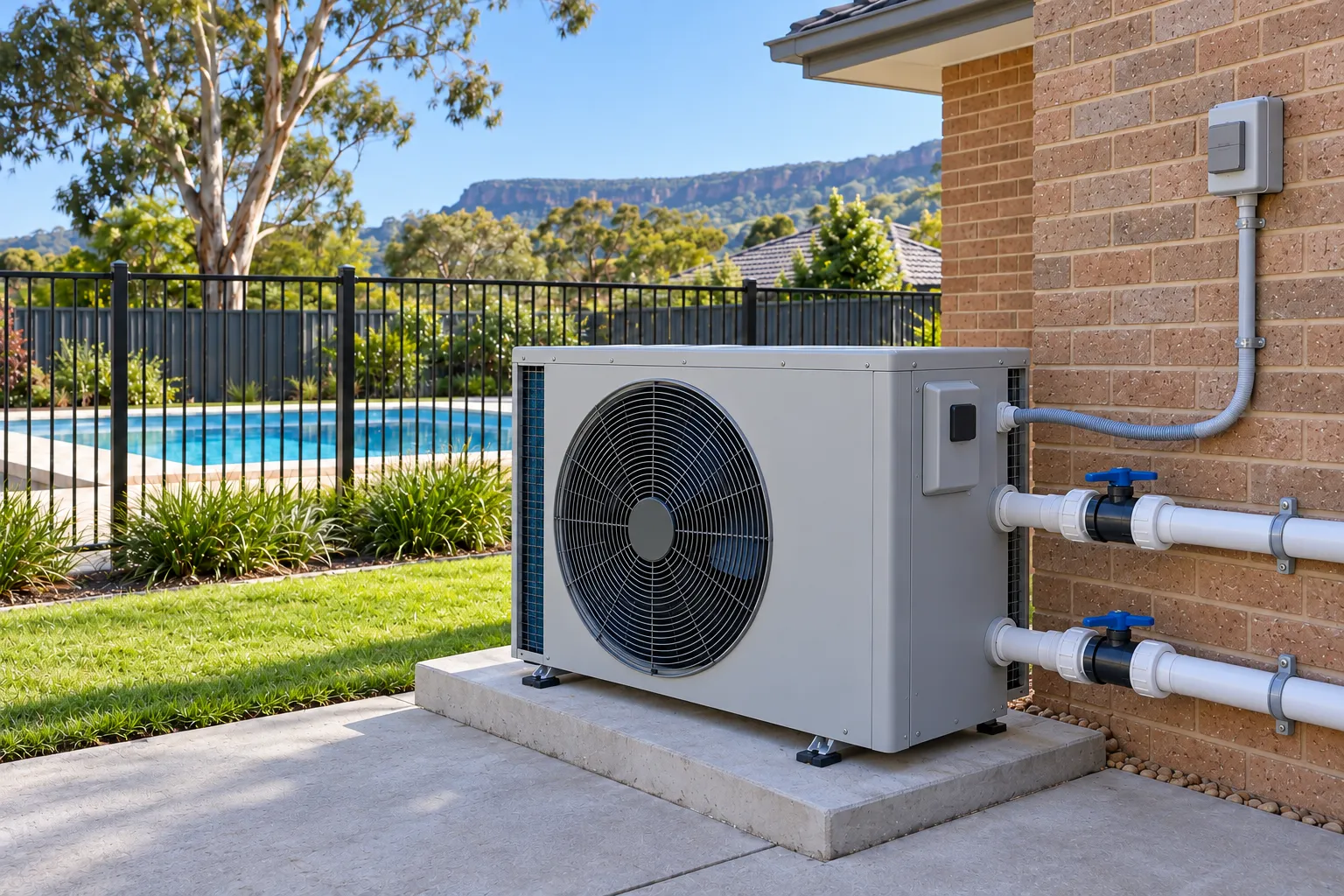
A pool heat pump can extend the swimming season and improve comfort, but its electrical requirements need to be considered before installation. A heat pump does not automatically require a dedicated circuit in every installation, but a separate circuit is often appropriate because of its electrical load, starting characteristics and extended operating periods.
Allround Electrical helps assess the electrical requirements of pool heat pumps, including circuit capacity, cabling, circuit protection and switchboard capacity. An electrician in Wollongong can determine whether an existing pool circuit is suitable or whether a dedicated circuit or power supply upgrade is needed.
The key considerations include the heat pump's electrical demand, how it interacts with other pool and household equipment and what can happen when the electrical supply is incorrectly sized. The right setup can reduce nuisance tripping, protect equipment and support reliable operation throughout the heat pump's service life.
Why Pool Heat Pumps May Need Their Own Circuit
Pool heat pumps can place a substantial load on a home's electrical system because they may operate for several hours while heating the pool. Unlike smaller pool equipment such as lights or automation controls, a heat pump powers a compressor and fan motor, creating higher running and starting demands.
A dedicated circuit gives the heat pump its own appropriately sized supply rather than making it share capacity with other pool equipment. Whether a dedicated circuit is required depends on the specific heat pump, manufacturer requirements, existing electrical installation and applicable wiring rules.
A separate circuit can help to:
- Prevent overloading: The heat pump does not have to share limited circuit capacity with pool pumps, chlorinators, lighting or outdoor outlets.
- Reduce nuisance tripping: Separating the heat pump from other loads reduces the chance of combined demand exceeding the circuit's capacity.
- Protect equipment: Correctly sized cabling and circuit protection help manage the heat pump's sustained load and starting characteristics.
- Simplify maintenance: The heat pump can be isolated for servicing or fault finding without unnecessarily affecting other pool equipment.
- Support compliance: The circuit can be designed around the heat pump's electrical specifications and the requirements applying to the installation.
The circuit arrangement should be based on the heat pump's electrical specifications rather than assuming an existing pool circuit has enough spare capacity.
How Is the Correct Circuit Size for a Pool Heat Pump Determined?
The correct circuit size for a pool heat pump is based on the unit's electrical requirements, manufacturer specifications and the conditions of the installation. An undersized circuit can cause nuisance tripping or excessive cable heating, while an incorrectly oversized breaker may leave the cabling without adequate protection.
An electrician will assess the heat pump's current requirements, cable capacity, voltage drop, protective devices and available switchboard capacity before selecting the appropriate circuit.
Check the Heat Pump Specifications
The heat pump's nameplate and installation manual provide the starting point for circuit design. Details can include:
- Rated or maximum input current
- Minimum Circuit Ampacity (MCA), where specified
- Maximum Overcurrent Protection (MOCP) or recommended breaker
- Supply voltage and phase
These figures help determine the conductor capacity and protective device required for the particular unit.
Size the Cable and Breaker
The circuit is designed in accordance with applicable requirements, including AS/NZS 3000. Cable size needs to account for the heat pump's load and installation conditions, while the breaker must provide appropriate protection without exceeding the manufacturer's permitted rating.
Long cable runs, grouped cables, conduit installation and thermal insulation can affect cable capacity and may require a larger conductor. Voltage drop also needs to remain within the applicable limits.
Check the Switchboard
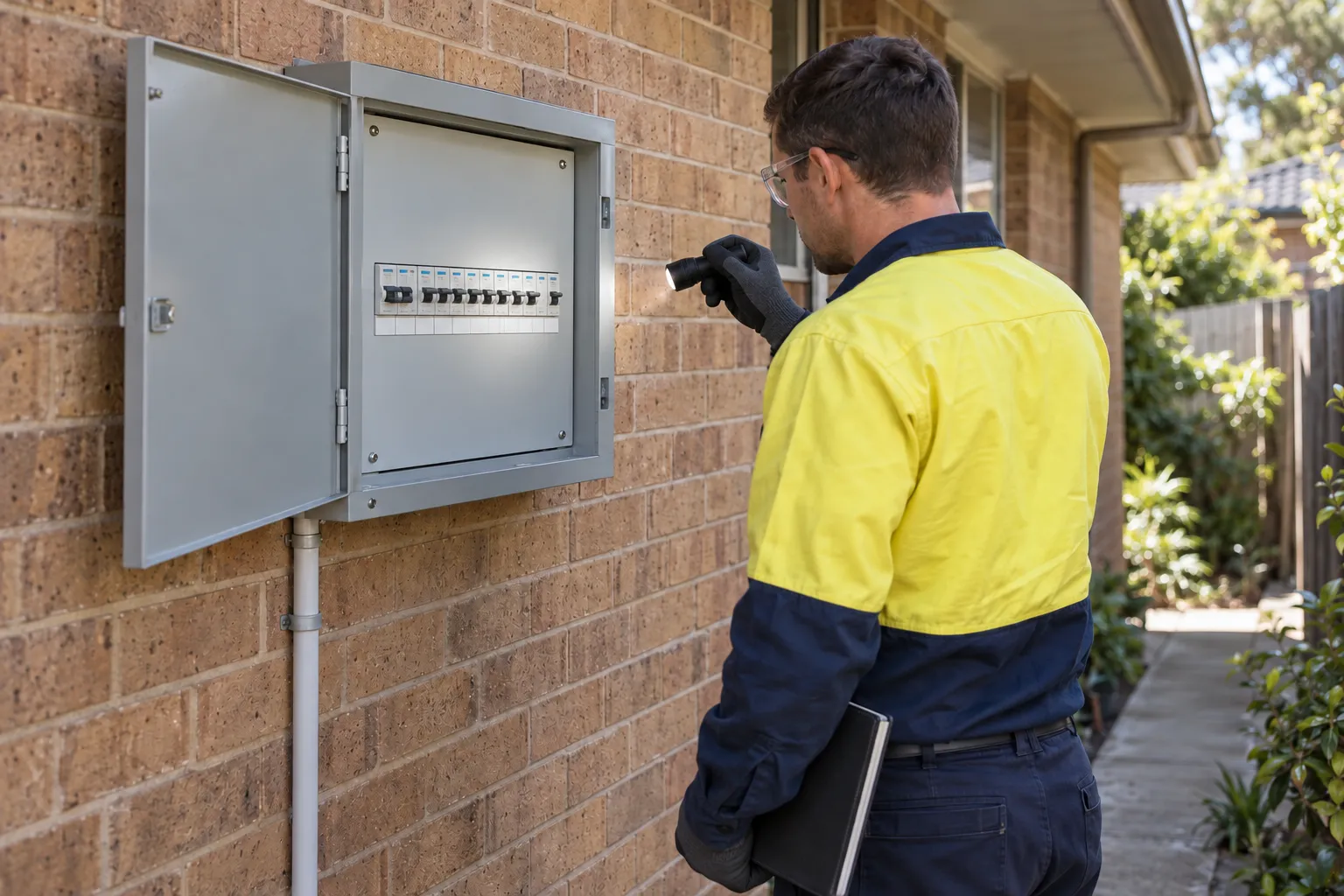
The existing switchboard should have sufficient capacity for the additional heat pump load. Electricians will check:
- Available space for the new circuit and protective devices
- Overall supply capacity
- Breaker and RCD requirements
- Compatibility of the protective devices with the cable and heat pump
Assessing switchboard capacity helps determine whether the heat pump can be accommodated or whether an upgrade is needed. This helps ensure the new circuit can operate safely alongside other pool and household electrical loads.
What Factors Affect a Pool Heat Pump's Electrical Load?
A pool heat pump's electrical load depends on more than its advertised heating capacity. The unit's size, operating conditions, compressor type and running time can all affect how much electricity it draws from the circuit.
Heat Pump Size and Heating Capacity
Larger pool heat pumps require more electrical power because they use larger compressors and fans to transfer more heat into the pool. Heating capacity in kilowatts is not the same as electrical input, so the manufacturer's electrical specifications should be checked rather than estimating circuit requirements from heating output alone.
Pool Size and Water Temperature
The size of the pool and the desired water temperature can influence how long the heat pump needs to operate. A larger pool or higher temperature setting may require longer heating cycles, increasing overall electricity consumption.
Outdoor temperature and heat loss also affect operating time. Pool covers and suitable insulation can reduce heat loss and help limit the time the heat pump needs to run.
Compressor Type and Starting Current
The compressor and control system can affect running current and starting demand. Conventional fixed-speed compressors can draw higher current when starting, while inverter-driven models can vary their output according to heating demand.
The circuit protection needs to account for the heat pump's normal operating and starting characteristics without compromising cable protection.
Other Pool and Household Loads
The heat pump may operate alongside filtration pumps, chlorinators, pool lighting and automation equipment. Household appliances can also contribute to the property's overall demand.
An electrician can assess these loads together to determine whether the existing supply has enough capacity or whether additional electrical work is required.
Can an Existing Pool Circuit Safely Power a Heat Pump?
An existing pool circuit can power a heat pump only if it has enough capacity for the heat pump and any other equipment operating on the same circuit. The circuit's breaker rating, cable size, installation conditions and the heat pump's electrical requirements all need to be checked before connection.
A dedicated circuit is often preferred because pool pumps, chlorinators, lighting and automation systems may already use much of the available capacity. Sharing the circuit can increase the risk of overloading or nuisance tripping when multiple items operate at the same time.
If the existing circuit does not have sufficient capacity, the heat pump should not be accommodated simply by fitting a larger breaker. An electrician can determine whether a dedicated circuit or switchboard modification is needed for a safe and suitable installation.
What Switchboard, RCD and Isolation Requirements Need to Be Considered?
A pool heat pump needs a suitable electrical supply, circuit protection and isolation arrangement. Before installation, the switchboard should be checked to confirm it can accommodate the additional load and required protective devices, while the heat pump circuit must be protected in accordance with applicable wiring requirements and the manufacturer's instructions.
Consider the following:
- Switchboard capacity: The board needs sufficient capacity and space for the heat pump circuit and its protective devices. An older or heavily loaded switchboard may require modification or an upgrade.
- RCD protection: The heat pump may require RCD protection based on the installation and applicable electrical requirements. The correct RCD or RCBO type and rating should be selected for the equipment and circuit.
- Circuit protection: The breaker and cable must be correctly matched to the heat pump's electrical load, starting characteristics and installation conditions.
- Isolation: A suitable local isolator allows the heat pump to be safely disconnected for servicing or in an emergency. It should be appropriately rated, clearly identified and suitable for its outdoor location.
NSW Government guidance explains how safety switches help protect against electric shock and why regular testing is important.
The exact arrangement depends on the heat pump, existing electrical installation and applicable requirements. A qualified electrician can assess these factors together rather than treating each component separately.
Does the Pool Heat Pump Need a Local Isolation Switch?
Yes, a pool heat pump needs a suitable means of local isolation so its electrical supply can be safely disconnected for servicing, maintenance or an emergency. The isolator provides a convenient way to shut down the heat pump without switching off other pool or household equipment at the main switchboard.
The isolation switch should be appropriately rated for the heat pump and suitable for its outdoor location. It should be readily accessible and positioned in accordance with the requirements applying to the installation, while the enclosure and fittings need suitable protection from outdoor conditions. The isolator also needs to work correctly with the circuit breaker and RCD or RCBO protecting the heat pump.
The exact isolation arrangement depends on the heat pump's electrical specifications, supply configuration and installation location.
What Happens If a Pool Heat Pump Is Connected to an Unsuitable Circuit?
Connecting a pool heat pump to an unsuitable circuit can cause repeated breaker trips, poor heating performance and damage to the unit. If the circuit is overloaded or lacks appropriate protection, it can also create overheating and electric shock risks.
Breaker Tripping and Poor Performance
An undersized or overloaded circuit may trip when the heat pump starts because the compressor can draw higher current during startup. Voltage drop can also affect performance when the cable run is too long or the conductors are not adequately sized.
Repeated tripping interrupts heating and can place additional stress on the heat pump. It should not be treated as a problem that can be resolved simply by repeatedly resetting the breaker. Understanding the possible causes of breaker tripping helps explain why persistent faults need professional assessment.
Overheating and Fire Risk
If cabling is not suitable for the heat pump's load, sustained current can cause excessive heating. Loose connections, damaged components, poor terminations or inadequate circuit protection can increase the risk of overheating, arcing and fire.
Outdoor installations also need protection from moisture and corrosion, which can affect electrical connections and equipment safety.
Equipment Damage and Safety Risks
Incorrect voltage, inadequate protection or repeated electrical faults can damage components such as compressors, capacitors and control boards. An unsuitable installation may also affect warranty coverage if manufacturer requirements have not been followed.
Inadequate earthing or RCD protection can also increase the risk of electric shock around pool equipment. Any unusual tingling, repeated tripping or signs of overheating should be investigated by a licensed electrician.
How Does Pool Heat Pump Installation Differ From Other Pool Equipment?
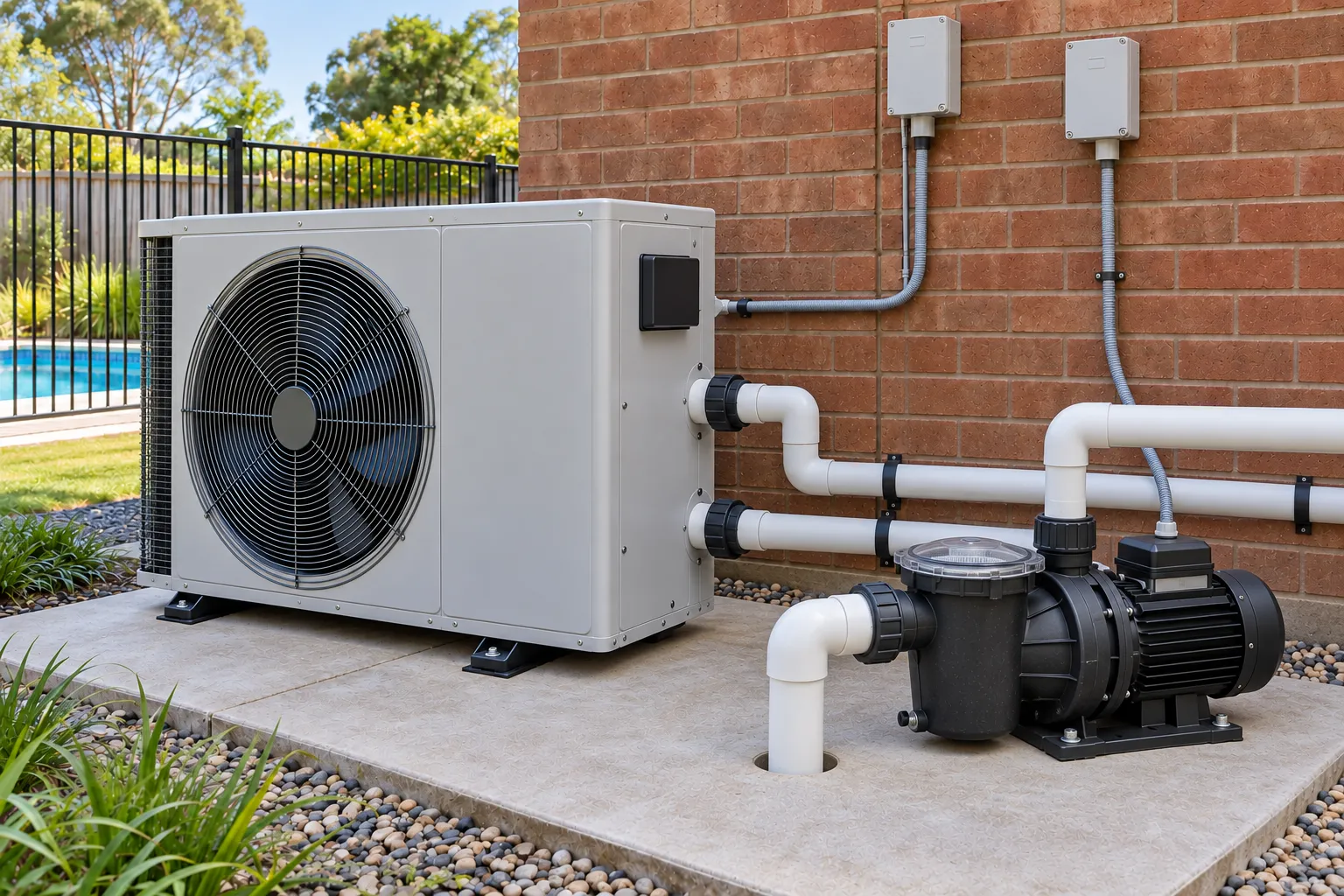
Pool heat pump installation requires more electrical planning than many smaller pool appliances. Unlike pool lights, controllers or automation equipment, a heat pump uses a compressor and fan that can create higher electrical demands and operate for extended periods.
Higher Electrical Demand
A pool heat pump draws more power than smaller pool equipment and can have higher starting demands when the compressor begins operating. The circuit, cabling and protective devices need to be selected according to the specific heat pump rather than simply using the circuit installed for smaller equipment.
Longer Operating Periods
Heat pumps may operate for several hours while heating or maintaining the pool temperature. This makes circuit capacity, cable sizing and voltage drop more important than with equipment that only operates for short periods. The heat pump may also operate at the same time as filtration pumps, chlorinators and other pool systems.
Greater Installation Planning
The heat pump's electrical supply, cable route and installation location all need to be considered before connection. Outdoor conditions, cable distance and available switchboard capacity can affect how the system is installed.
Planning pool heater installation early helps coordinate the electrical supply and plumbing connections. An electrician can assess the heat pump alongside the existing pool equipment and determine the appropriate circuit, cabling, protection and connection method.
When Is a Power Supply Upgrade or Level 2 Electrician Required?
A power supply upgrade may be required when a pool heat pump adds more demand than the property's existing electrical supply can safely support. An electrician can assess the heat pump's requirements alongside the home's existing loads, switchboard capacity and incoming supply to determine whether additional capacity is needed.
When Is a Power Upgrade Needed?
An upgrade may be considered when:
- The existing supply is already close to its capacity.
- The switchboard or consumer mains cannot accommodate the additional load.
- The heat pump requires a different supply configuration.
- Other high-demand equipment is already operating at the property.
A larger circuit breaker alone does not increase the capacity of the incoming electrical supply. The wider installation needs to be assessed before additional demand is connected.
When Is a Level 2 Electrician Required?
A Level 2 electrician in Wollongong may be required when work involves the property's connection to the electricity network, consumer mains, service equipment or metering. This can apply when an electrical supply needs to be upgraded, consumer mains need replacement or changes are required at the network connection point.
The exact requirements depend on the property, heat pump and local electricity distributor. An electrician can assess the existing supply and determine whether standard electrical work is sufficient or whether Level 2 services are needed for the proposed upgrade.
How Can an Electrician Check Whether a Pool Heat Pump Has the Right Power Supply?
An electrician can determine whether a pool heat pump has the right power supply by comparing the unit's electrical requirements with the existing circuit, switchboard and property supply. The assessment considers the heat pump's current requirements, voltage, phase configuration, cabling, circuit protection and the other electrical loads already operating at the property.
Check the Heat Pump Requirements
The manufacturer's specifications provide the starting point for the assessment. The electrician checks the required voltage, phase, current and circuit protection, then determines what type of electrical supply the specific heat pump needs.
Assess the Existing Supply
The existing circuit and switchboard are checked for available capacity, suitable cabling and appropriate protective devices. The electrician also considers other pool and household loads to determine whether the heat pump can use the existing supply or requires a dedicated circuit, switchboard modification or power upgrade.
Test the Completed Installation
After installation, the electrical connections and protective devices should be inspected and tested to confirm safe operation. This can include checking RCD or RCBO operation, earthing and other relevant requirements before the heat pump is placed into normal service.
NSW Government electrical compliance requirements also cover testing and certification through a Certificate of Compliance for Electrical Work (CCEW).
Assessing the electrical supply before installation helps identify capacity issues early and reduces the risk of nuisance tripping, voltage problems or unexpected electrical work after the heat pump has been installed.
A pool heat pump's electrical requirements should be assessed carefully rather than treated as an extension of existing pool equipment. The unit's electrical load, operating time and starting characteristics can affect circuit capacity, while correct cable sizing, circuit protection and switchboard capacity help support safe and reliable operation. A dedicated circuit is often appropriate where the existing pool supply cannot safely accommodate the additional demand.
Before installation, Allround Electrical can assess the proposed heat pump, existing electrical supply and pool equipment to determine whether the current setup is suitable. Where additional capacity, a new circuit or a power supply upgrade is required, early electrical planning can help prevent nuisance tripping, equipment problems and costly changes after installation.