
June 18, 2026
What Electrical Work Should Be Planned for an Outdoor Entertaining Area?
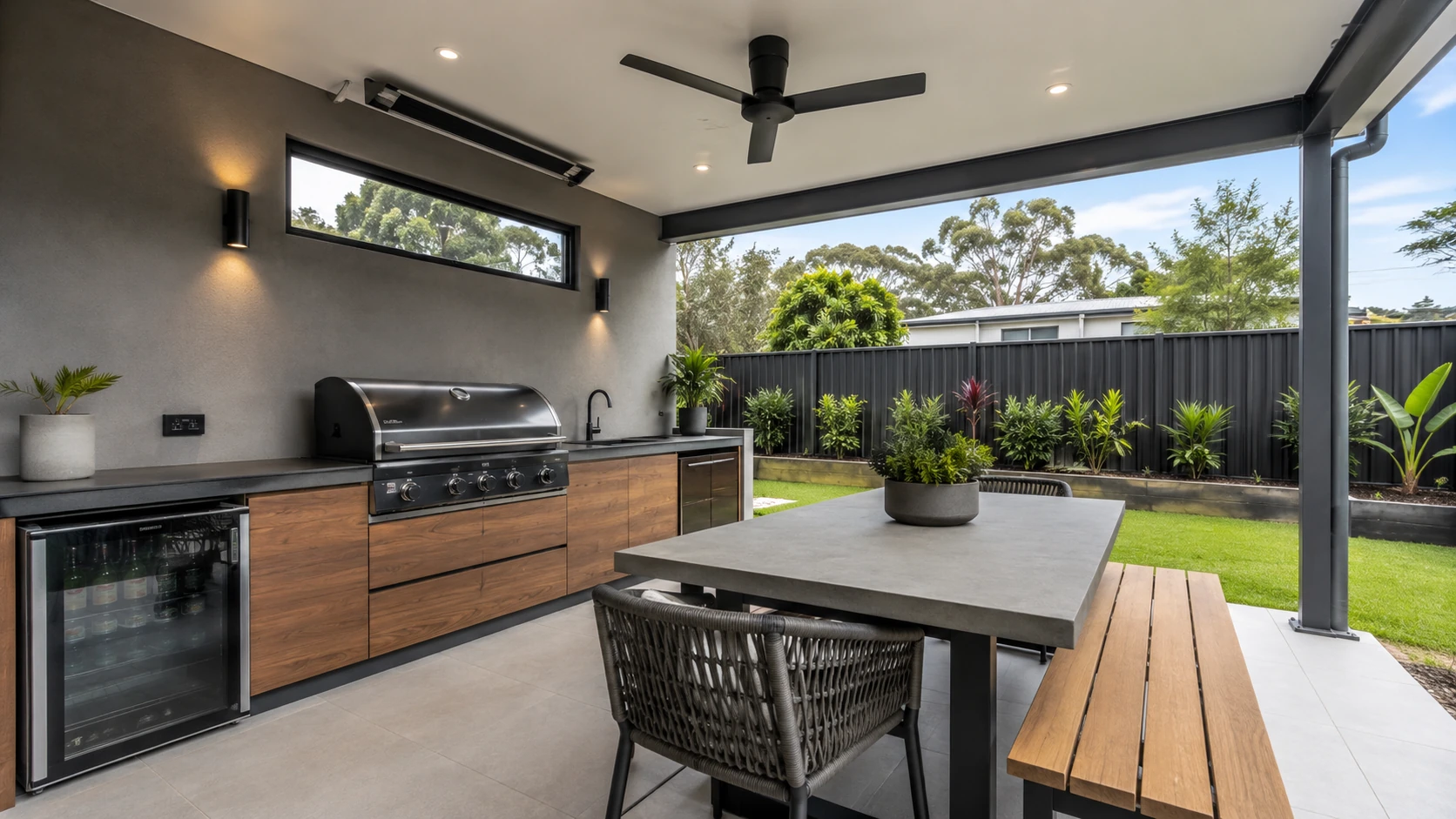
Creating an outdoor entertaining area involves choosing finishes, furniture and landscaping features. Behind every well-functioning outdoor space is a carefully planned electrical system that supports lighting, cooking appliances, entertainment equipment, climate control and future technology upgrades. Whether the project involves a simple covered patio or a fully equipped outdoor kitchen and living area, early electrical planning helps ensure the space remains safe, practical and adaptable.
Working with an experienced electrician in Wollongong, such as Allround Electrical, during the planning phase can help identify power requirements, equipment locations and compliance considerations before construction begins. This article discusses the electrical factors to consider before decking, paving or landscaping work starts. Addressing these elements early can help prevent costly modifications and support a more functional outdoor entertaining environment.
Decide How the Space Will Be Used
Electrical planning for an outdoor entertaining area should start with a clear idea of how the space will function during the day and at night. The number and type of power points, lighting fixtures and circuits required will depend on whether the area is used occasionally for simple barbecues or regularly as a fully equipped outdoor room.
Begin by considering the size of the area, how many people will usually be present and what activities will take place. A compact patio with a dining table and barbecue will have different requirements from an outdoor kitchen with a television, refrigerator, radiant heaters and layered lighting.
Furniture placement is also important. Dining tables may benefit from overhead lighting, while lounge areas often require softer ambient lighting and conveniently positioned outlets for occasional device charging or decorative lighting. Pathways, steps and access points between the house and garden should also be considered so lighting can be positioned where it improves visibility and safety.
Thinking through these details before construction begins will guide decisions about expected electrical loads and the type and location of the required fittings.
Check the Existing Electrical Capacity
Before selecting appliances, heaters and entertainment equipment, it is important to confirm whether the existing electrical system can support the planned additions. An outdoor entertaining area may place additional demand on the property’s switchboard, particularly when several high-load appliances are used at the same time.
An electrician can assess the existing switchboard, available circuit capacity and the likely combined load of the proposed equipment. This may include electric barbecues, pizza ovens, refrigerators, radiant heaters, ceiling fans, lighting, pumps and motorised blinds.
The rating and manufacturer instructions for each appliance should be reviewed to determine whether a dedicated circuit is required. This is particularly important for larger appliances and heating equipment, as operating several items at the same time may place considerable demand on the electrical system.
In some cases, new circuits or switchboard upgrades may be required. Identifying these requirements before construction begins allows electrical work to be coordinated with cabinetry, decking, paving and landscaping rather than added later as a costly alteration.
Where the existing system has limited capacity or outdated protection, it may also be worth reviewing when a switchboard upgrade or relocation may be required before additional circuits are installed.
It is also worth allowing for future changes. Spare conduits or additional capacity can make it easier to add garden lighting, outdoor speakers, Wi-Fi equipment, security cameras or other technology as the space evolves.
Plan Outdoor Power Points for Practical Use
Outdoor power points should be positioned to support specific activities rather than evenly spaced along a wall as an afterthought. Mapping the expected location of appliances, benches, seating areas and garden features can help create a more practical layout.
Cooking and Food Preparation Zones
Outdoor kitchens often require outlets for a combination of fixed and portable appliances. Depending on the design, this may include:
- Electric barbecues, grills or smokers
- Pizza ovens
- Bar fridges or beverage fridges
- Benchtop appliances
- Rotisseries or electronic ignition systems
- Rangehoods or exhaust fans
- Task lighting beneath cabinets or overhead structures
Outlet locations should be planned around the layout of benches and cabinetry so appliances do not rely on power boards or trailing leads. Power points above benches should be conveniently positioned but protected from splashes, direct weather and potential impact.
The electrician should assess appliance ratings, manufacturer instructions and expected simultaneous use to determine whether dedicated circuits are required. A high-load electric barbecue or radiant heater may need a different electrical arrangement from a small refrigerator or benchtop appliance.
Many of the same principles involved in electrical planning for a kitchen renovation also apply to outdoor kitchens, particularly where cabinetry, fixed appliances and task lighting need to be coordinated before construction begins.
Dining and Lounge Areas
Dining and lounge areas may also benefit from additional outlets. Consider whether power will be needed for device charging, decorative lighting or occasional equipment use.
Furniture layouts often change over time, so allowing outlets on more than one wall or post can improve flexibility and reduce the need for extension leads. Any planned outdoor heaters should be discussed separately with the electrician because their electrical demand may affect circuit design.
Garden and Landscaping Features
Landscaping plans may also include electrical requirements. Garden lighting, irrigation controllers, pumps and water features should be considered before paths, retaining walls and garden beds are completed.
Outlets and cable routes should be positioned so they remain accessible for maintenance without becoming trip hazards or interfering with garden work. Any electrical equipment installed near water must be selected and positioned carefully for the conditions.
Design Layered Outdoor Lighting
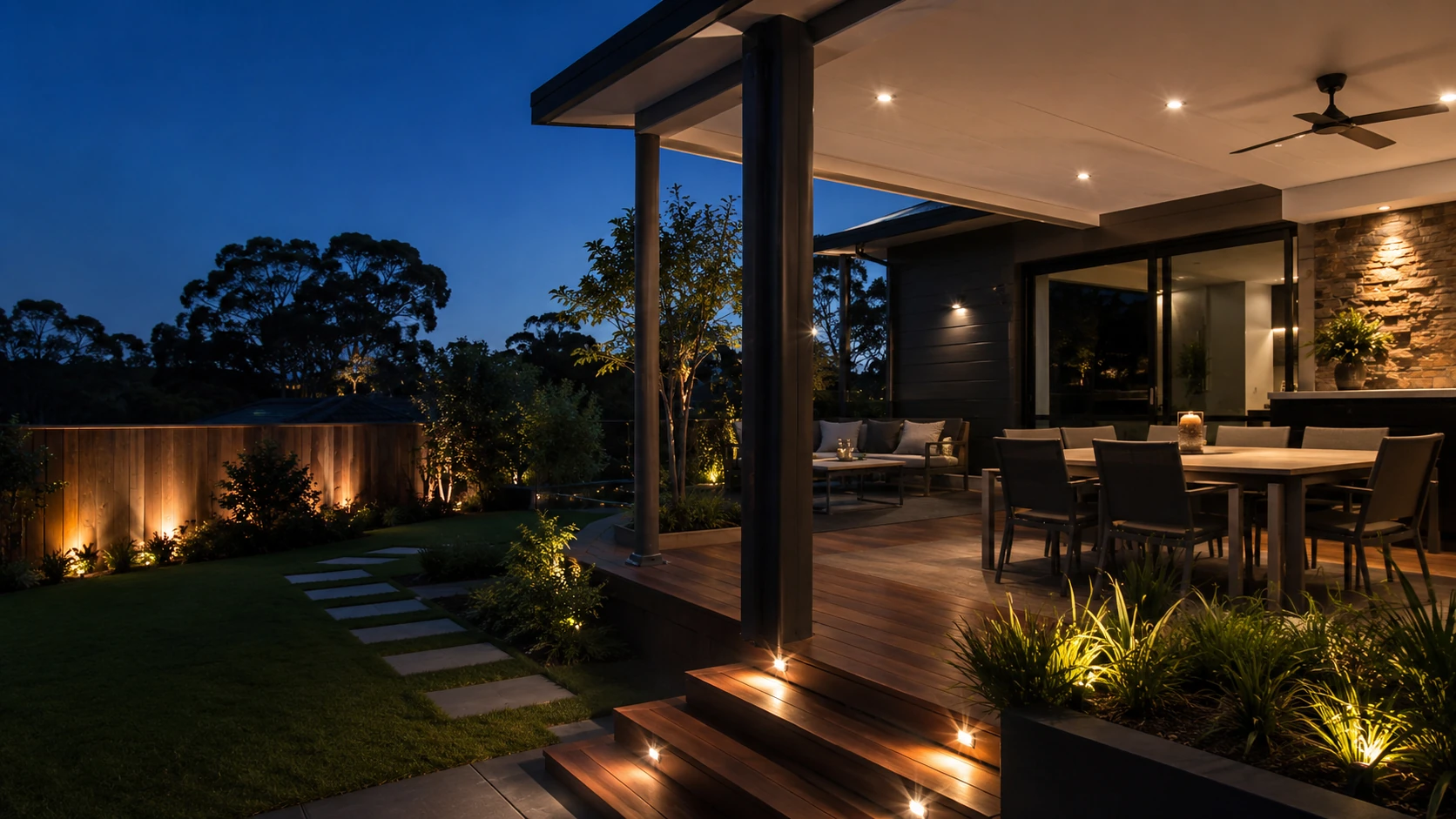
A well-planned outdoor area usually combines several types of lighting rather than relying on one bright fitting. Layered lighting can improve safety, make food preparation easier and create a more comfortable atmosphere after dark.
Task Lighting
Task lighting provides focused illumination where activities take place. It is particularly useful above:
- Barbecues and cooking appliances
- Outdoor kitchen benches
- Dining tables
- Steps and level changes
- Entry doors and access points
Task lighting may include downlights, directional wall lights or under-cabinet strip lighting. Fixture positions should be confirmed early so wiring can be concealed inside overhead structures, cabinetry, posts or walls.
Ambient and Feature Lighting
Ambient lighting creates comfortable general illumination without excessive glare. Depending on the structure, this may include wall lights, ceiling fittings or dimmable downlights beneath a covered patio.
Feature lighting can be used more selectively around gardens, architectural elements or retaining walls. Deck lights, pathway lights and garden spike lights can also help define the edges of the entertaining area and guide movement through the property.
Garden and deck lighting must be suitable for outdoor use and selected for the level of moisture exposure in each location. Extra-low-voltage lighting may be appropriate in some areas, but the design should be assessed by an electrician, particularly where fittings are installed near pools, spas or water features.
Switching and Controls
Switch locations should reflect how people enter and use the space. Typical positions include the main door from the house, an outdoor kitchen and other frequently used access points.
Separating task, ambient and feature lighting into different switching groups allows the area to be adjusted for different occasions. Bright task lighting may be useful during food preparation, while softer ambient and garden lighting may be preferred later in the evening.
Dimmers, timers, sensors and smart controls can also be considered where appropriate. Planning these features early makes it easier to install the required wiring and avoid unnecessary surface-mounted cables.
Allow for Entertainment and Connectivity
Outdoor entertaining areas increasingly include televisions, speakers and internet-connected equipment. Planning these features before walls, ceilings and decks are finished can prevent visible leads and make the space easier to use.
This may include power outlets and concealed pathways for data, HDMI and speaker cabling for:
- Wall-mounted outdoor televisions
- Streaming devices or media players
- Soundbars
- Outdoor speakers
- Wi-Fi access points
- Data outlets
- Security cameras
- Smart lighting or control systems
Outdoor televisions generally require a suitably positioned power outlet behind the screen to keep cabling concealed. The mounting location should be selected with weather exposure, glare and viewing angles in mind.
Conduit routes for data and other cables should be installed at the same time as the electrical work so equipment can be upgraded or replaced later without opening finished walls. Speaker cables can be routed back to a protected location so amplifiers and other sensitive equipment remain sheltered.
A reliable Wi-Fi connection is also worth considering. Outdoor entertaining areas may be some distance from the home’s router, particularly on larger properties. Allowing for a data cable or access point can improve streaming, smart controls and general connectivity.
Plan for Comfort and Year-Round Use
Comfort features can significantly affect how often an outdoor entertaining area is used. If the space is intended for year-round use, heating, airflow and weather protection should be considered during the design stage.
Ceiling Fans
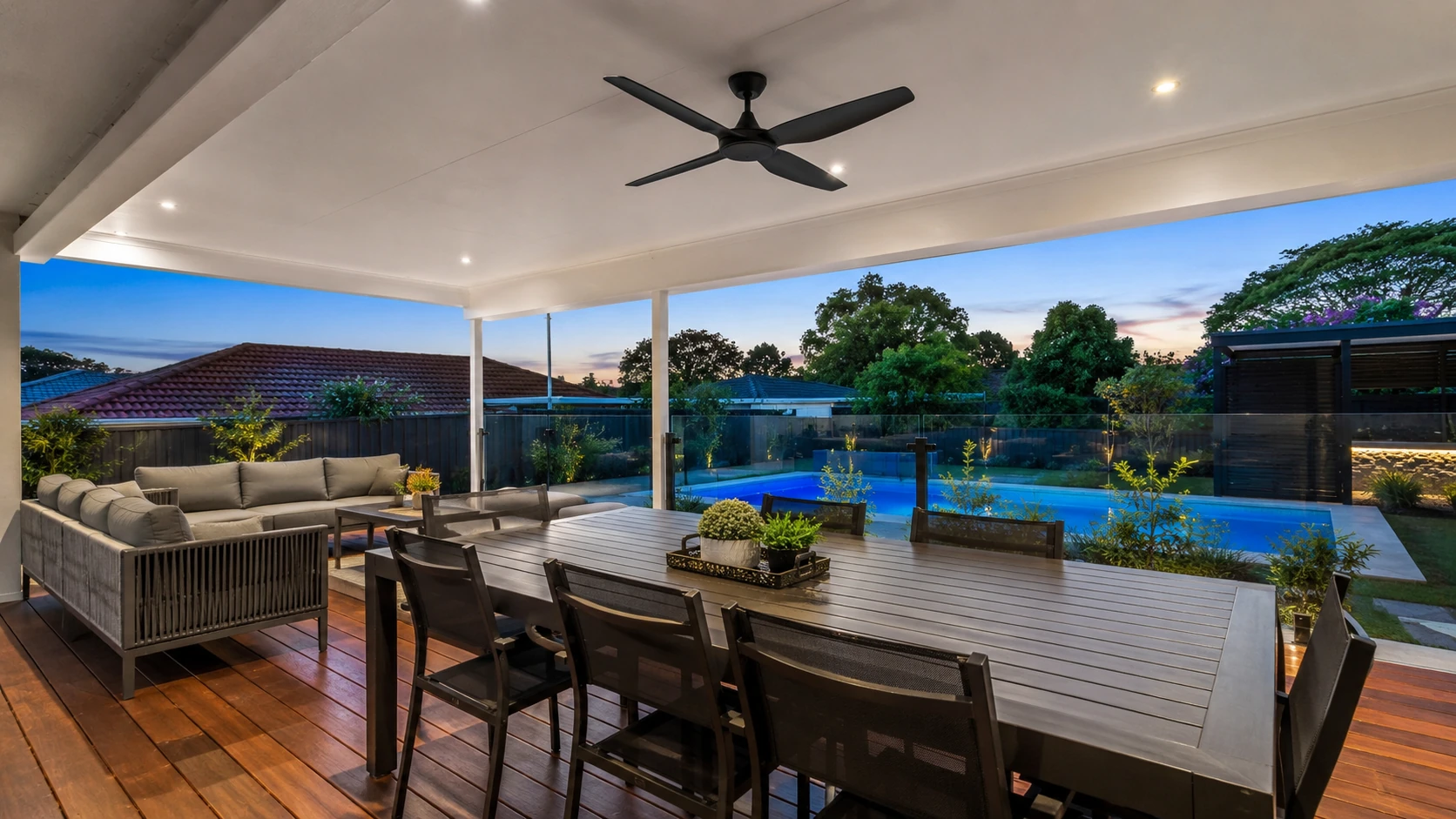
Ceiling fans are a useful addition to covered patios and outdoor living areas. They can improve airflow in warm weather and may help discourage insects.
Fan wiring, switching and mounting locations should be planned before ceiling materials are installed. The structure must also be suitable for the selected fan, and the fitting must be appropriate for the exposure level in that location.
Outdoor Heating
Radiant heaters and panel heaters can make a covered entertaining area more comfortable during cooler months. These units can draw significant current, so the number, size and location of any heaters should be decided early.
The electrician can assess whether new circuits or controls are required and ensure the installation is coordinated with the ceiling structure, walls and outdoor kitchen layout.
Portable heaters should not be treated as a substitute for a properly planned installation. Relying on extension leads or power boards in an outdoor area may introduce avoidable safety risks.
Motorised Blinds, Louvres and Awnings
Motorised blinds, shutters, louvres and awnings may require power at specific mounting points. Cable routes should be planned alongside the structural design before posts, walls and cladding are finished.
Switches, remotes or smart controls can also be incorporated into the design so these features are easy to operate without creating visual clutter.
Consider Safety Requirements for Outdoor Electrical Work
Outdoor entertaining areas are exposed to moisture, temperature changes, UV exposure and physical wear. Electrical fixtures and cabling must be selected and installed for the conditions in which they will be used.
Safety is not only about choosing appropriate fittings. It also involves circuit protection, cable routes, clearances from water and the location of outlets in relation to walkways, cooking equipment and landscaping work.
Select Equipment for the Level of Exposure
External power points, switches and light fittings must be suitable for their location and degree of weather exposure. A fitting beneath a deeply covered patio may have different requirements from one exposed to wind-driven rain, direct water spray or regular moisture.
The appropriate IP rating should be determined based on the installation location. Protective covers, suitable housings and careful positioning can help reduce the risk of water ingress and premature deterioration.
Coastal conditions should also be considered in Wollongong and surrounding areas. Salt-laden air may contribute to corrosion, particularly where fittings are close to the coastline or exposed to prevailing winds. Selecting appropriate outdoor-rated equipment and arranging periodic checks can help identify deterioration before it causes a fault.
Confirm RCD Protection
Outdoor circuits should have the required safety-switch or residual current device protection. An RCD is designed to disconnect the electricity supply quickly when harmful leakage to earth is detected, reducing the risk of electric shock.
Homeowners should also test safety switches twice a year using the test button on the switchboard. If a safety switch does not trip or cannot be reset, a licensed electrician should investigate the issue.
An electrician should check whether existing outdoor circuits are appropriately protected and whether upgrades are required as part of the project. This is particularly important when new outlets, appliances or lighting circuits are added.
Extension leads and portable power boards should not be relied upon as a permanent solution for outdoor refrigerators, heaters, cooking equipment or entertainment systems. Fixed outlets positioned for the intended use are generally safer and neater.
Keep Electrical Equipment Away From Pools and Spas
Any entertaining area close to a pool or spa requires careful electrical planning because specific electrical zones and equipment restrictions apply. The layout should be assessed before outlets, switches, lighting or equipment are installed.
Water features also need to be considered when selecting fitting locations and protection methods. Pumps, lighting and nearby outlets must be chosen and positioned for the expected level of moisture exposure.
Electrical planning should be coordinated with pool fencing, landscaping and paving so fittings are not installed in unsuitable locations or added as an afterthought.
Reduce Trip and Impact Hazards
Temporary cords running across walkways, steps or lawns create a risk of falls and may be damaged by furniture movement, foot traffic, gardening tools or weather exposure.
Permanent installations should avoid low-hanging cables and position fittings so they are clear of common traffic paths and children’s play areas. Electrical outlets and lighting should also be placed where they are unlikely to be damaged by lawnmowers, line trimmers or future landscaping work.
Complete Electrical Work Before Decking and Landscaping Begin
Electrical planning for an outdoor entertaining area should be completed before decking, tiling, concreting or landscaping work starts. Once surfaces are finished and garden features are installed, it can become difficult and more expensive to run cables, add outlets or change lighting positions.
Engaging an electrician early allows conduits, cabling and junction points to be concealed neatly within subfloors, walls and underground routes. This protects wiring, improves safety and creates a cleaner finished appearance.
Run Conduits and Cabling Before Surfaces Are Finished
Underground and concealed electrical routes should be coordinated before concrete is poured or decking boards are fixed. Depending on the project, this may include:
- Underground conduits from the switchboard to the outdoor area
- Conduits beneath pathways, driveways and garden beds
- Wiring beneath deck frames for outlets, lighting and fans
- Cable pathways inside pergola posts or patio roof structures
- Spare conduits for future upgrades
Depth and protection requirements apply to underground cabling. Cable routes, conduits and trenches should therefore be coordinated with the electrician before backfilling or installing finished surfaces.
Under decks, cables must be protected from moisture, pests and accidental damage during future maintenance or landscaping works. The installation method should be determined by the electrician based on the design and site conditions.
Coordinate With Builders and Landscapers
Careful coordination between the electrician, builder and landscaper can help prevent clashes and rework. Electrical layouts should be confirmed before finalising footing locations, retaining walls, planter boxes, irrigation runs and garden structures.
Penetrations through walls, posts and slabs should also be agreed upon in advance so conduits can be installed at the correct stage. For example, pergola or patio-roof posts may need internal cabling for lighting, fans or motorised blinds. This is easier to arrange before the structure is assembled than to retrofit later with visible surface-mounted conduit.
Irrigation controllers, pumps and water features also require suitable power arrangements. Planning these points before landscaping begins helps prevent electrical and plumbing services from competing for the same space or being damaged during later work.
Allow for Future Upgrades
Outdoor areas often evolve after the initial construction work is complete. A simple patio may later gain an outdoor kitchen, additional lighting, security cameras or motorised blinds.
Providing spare conduits and considering additional capacity during the original installation can make future upgrades easier. It may also reduce the need to disturb finished surfaces or install visible cables later.
Possible future additions include:
- Additional garden or feature lighting
- Outdoor speakers
- Wi-Fi access points
- Security cameras
- Electric cooking equipment
- Additional refrigerators
- Motorised blinds or louvres
- Heating equipment
- Irrigation controllers or pumps
Not every feature needs to be installed immediately. However, discussing likely future requirements with the electrician can help ensure the initial design remains practical as the space changes.
Speak With a Licensed Electrician Early
All fixed wiring, new circuits and electrical installations must be completed by, or under the supervision of, a licensed electrician. Engaging an electrician early also makes it easier to confirm the required safety measures, coordinate the work with other trades and ensure the completed installation is tested and documented correctly.
Successful outdoor entertaining areas depend on electrical planning that is completed well before construction and landscaping works begin. By considering how the space will be used, checking the property’s existing electrical capacity and selecting equipment that is suitable for outdoor conditions, property owners can create an entertaining area that is practical, safe and ready for future changes.