February 5, 2026
Cutting Energy Costs: Practical Tips from Local Electricians

Rising energy prices in Wollongong are making families rethink how power gets used at home and where savings can be found without losing comfort or safety. Our professionals at Allround Electrical hear from homeowners who feel frustrated by high bills even though they believe they are careful with usage. Many homes have similar hidden inefficiencies like wiring issues and outdated appliances that quietly inflate costs and require inspection by an electrician in Wollongong. Seeing these issues every day gives us a realistic view of what changes matter most and how to fix them without confusing technical jargon.
Most families do not want major life changes just to keep their bills under control. Allround Electrical focuses on practical improvements that fit normal routines and budgets so households can lower bills without feeling restricted. Our aim is to help homeowners understand where their energy goes and how to manage loads or how simple upgrades can make the home more efficient. From smart devices to wiring changes, we offer guidance based on real experience inside real homes.
How to Find Hidden Energy Drains in Your Home
Homes often waste more power than people realise, and most of it happens quietly in the background. Many families think high bills come from peak usage, but a lot of waste comes from older appliances and standby functions and even damaged wiring or temperature leaks. Over time these small inefficiencies stack up and become part of normal bills until homeowners accept them as unavoidable. With the right checks these hidden draughts can be found and reduced without sacrificing comfort.
Identifying Standby Consumption from Appliances
Many appliances draw power even when switched off, and this standby load adds up across the home. Devices with timers and screens or sensors stay partially active, which means they never fully stop consuming power. Checking these devices reveals how much energy gets used when nothing is actually happening.
- Entertainment systems with linked units stay network ready, which means TVs or speakers and consoles continue to draw small amounts of power around the clock.
- Small office devices like printers or modems and chargers remain energised and consume power even when not performing tasks or charging anything.
- Kitchen devices with clocks or alerts continue to run internal boards that add unnecessary load over long periods of time.
Standby consumption is one of the easiest forms of waste to eliminate. Most households can reduce it without spending much or changing their lifestyle.
Assessing Old or Faulty Wiring for Heat Loss
Ageing wiring and loose connections cause resistance that creates heat instead of useful power. Older homes or homes with previous DIY work often struggle with these issues without showing obvious symptoms. A wiring inspection helps reveal where power is being lost and where safety improvements are needed.
- Loose terminals at outlets and switches create arcs that reduce efficiency and add small amounts of heat that contribute to waste.
- Undersized or deteriorated wiring increases resistance, so appliances need more current to perform the same tasks.
- Voltage fluctuations caused by wiring faults reduce appliance performance and force longer run times to reach the desired result.
Fixing wiring faults stops hidden electrical loss and reduces strain on appliances. It builds a stronger, more efficient electrical system.
Finding Temperature Leaks Affecting Electrical Loads
Temperature leaks increase energy costs by making heating and cooling appliances work harder. Draughts or poor sealing and weak insulation are common in many homes and often go unnoticed for years. Identifying these leaks can make climate control systems operate more efficiently.
- Air gaps at doors and windows let conditioned air escape, so heaters and coolers run longer cycles to achieve set temperatures.
- Roof insulation that has shifted or broken down creates uneven temperature control, which increases appliance run time.
- Thermostats respond to slow leaks with frequent activations that gradually increase total daily energy consumption.
Reducing temperature leaks lowers appliance workload and improves comfort. It is a simple way to reduce energy costs across the year.
The Role of Smart Technology in Energy Saving
Smart devices are popular because they offer control and transparency without adding effort. Automation and real-time data make it easier for families to adjust habits and stop waste before it becomes expensive. These tools work quietly in the background so savings build naturally over time. Installation is flexible for different budgets and lifestyles, so households can adopt them gradually.
Using Smart Metres for Real-Time Monitoring
Smart metres show how much energy is used throughout the day so families understand where their money is going. Usage patterns often look different from what people expect, and the data helps them make better decisions. We help homeowners read the data so they can take advantage of the insights.
- Smart metres highlight peak usage periods so households can shift certain tasks to lower-cost times if available.
- Sudden usage spikes reveal inefficient or failing appliances that need repair or replacement.
- Long-term graphs show whether new habits or upgrades are genuinely improving energy use or not.
Real-time monitoring makes energy management easier and more accurate. Families feel more informed and in control of their bills.
Automating Lighting and Climate Control
Automation reduces energy waste by making sure devices are only running when needed. Lights and heaters often stay on longer than necessary simply because people forget to switch them off. Automated systems solve this issue and maintain comfort while using less power.
- Motion sensors switch lights off after a short delay in empty rooms so electricity is not wasted throughout the day.
- Timers and smart switches align appliance use with sleep and work schedules to reduce unnecessary run time.
- Climate automation adjusts heating and cooling gradually, which uses less power than frequent on-off cycles.
Automated controls cut waste without affecting comfort. The result is a quieter and more consistent form of energy saving.
Integrating Smart Plugs for Appliance Control
Smart plugs give homeowners control over individual appliances and provide basic usage data. They are a low-cost option for families who want more control without full home automation. Installation is simple, and they work with most existing appliances.
- Remote control allows appliances to be turned off from anywhere, so devices do not run all day when no one is home.
- Usage reports show how much power each device consumes, so homeowners can identify inefficient equipment.
- Scheduling features ensure appliances only run when necessary, which prevents overnight or daytime standby waste.
Smart plugs provide simple control and useful data. They support smarter usage without major investment.
Upgrading Wiring for Better Efficiency
Older electrical systems were not built for modern power demands, and that creates inefficiencies. Upgrading wiring improves performance and reduces wasted energy by improving current flow and appliance stability. These upgrades also improve safety and prepare the home for future electrical needs. Households with older wiring often notice efficiency improvements immediately after upgrading.
Replacing Undersized Circuits
Undersized circuits create bottlenecks that reduce efficiency and cause annoyance. High-draw appliances struggle when circuits cannot provide stable current, which leads to unnecessary power consumption. Upgrading circuits resolves these issues and makes the home more suitable for modern living.
- Appliances draw more current when circuits are overloaded, which increases total household power use.
- Frequent breaker trips are a sign of inefficiency as well as a safety concern that needs fixing.
- Upgrading circuits spreads demand across the home, so high-load areas no longer affect overall performance.
Upgraded circuits improve reliability and make electrical usage more efficient.
Fixing Voltage Drop Issues
Voltage drop reduces appliance performance and increases energy use. Long cable runs or outdated wiring are common causes. We test for voltage drop and correct it so appliances operate under ideal conditions.
- Appliances work harder when voltage is low, which increases current draw and shortens lifespan.
- Voltage drop can damage sensitive equipment and lead to repair costs that could have been avoided.
- Fixing drop issues improves appliance performance and reduces total run time, which lowers energy consumption.
Fixing voltage drop creates a stronger electrical system. Homes become more efficient, and appliances perform better.
Upgrading Switchboards for Modern Loads
Modern switchboards support higher electrical loads and better safety features. Older boards struggle with newer appliances and can become a source of inefficiency. Upgrading the board prepares the home for future electrical needs and improves safety.
- Older boards lack modern safety switches that protect circuits and prevent wasteful faults.
- New boards handle large power spikes without overheating or tripping, which reduces unnecessary stress.
- A modern board supports additional circuits for renovations and future upgrades.
Switchboard upgrades support efficient power use and modern household demands. They provide a reliable platform for future improvements.
Regular Maintenance That Reduces Bills
Maintenance prevents small problems from growing into expensive issues. Dust or corrosion and loose components make appliances less efficient and increase long-term costs. Regular checks keep the electrical system operating smoothly and lower the risk of faults. We tailor maintenance schedules to meet the needs of different homes and budgets.
Checking Connections and Terminals
Loose or dirty terminals reduce efficiency and create resistance that wastes power. We check and tighten these points to improve performance and safety. This task is simple but valuable for long-term efficiency.
- Corrosion interrupts electrical flow and forces circuits to draw extra current to achieve the same output.
- Loose terminals create heat and voltage fluctuations that damage appliances and reduce efficiency.
- Cleaning and tightening improves stability and protects both appliances and circuits.
Secure terminals reduce energy loss and protect appliances. It is a small task that supports long-term efficiency.
Cleaning Appliance Components
Dirty components make appliances run longer and consume more power. Dust buildup blocks airflow and heat exchange, which increases energy use. Keeping appliances clean is a low-cost way to maintain efficiency.
- Fans and climate units run harder when vents and filters are blocked, which increases total energy consumption.
- Refrigerators run longer cycles when coils or seals are dirty, which adds noticeable cost over time.
- Heaters struggle when sensors and elements are dusty, which reduces performance and comfort.
Cleaning boosts efficiency and prevents early wear. It is a simple habit with long-term benefits.
Testing Safety Devices for Reliability
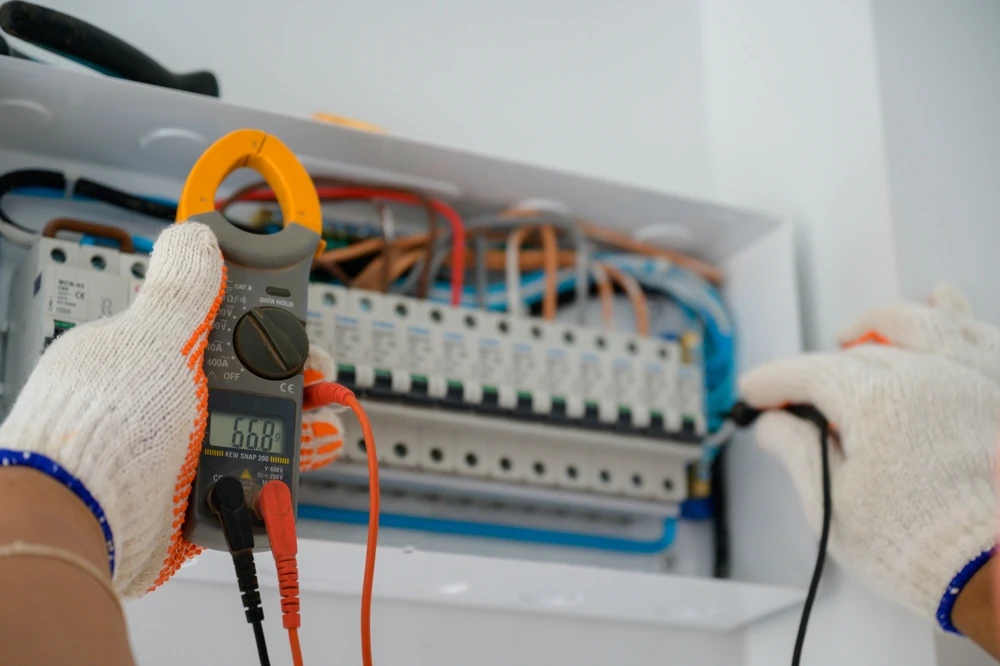
Safety devices prevent faults from damaging appliances and circuits. Faulty devices allow wasteful conditions to continue unnoticed. We test these devices to ensure they are working correctly.
- Faulty safety switches allow small leakage currents that increase energy use and reduce safety.
- Surge protection keeps appliances stable during voltage spikes, which preserves efficiency.
- Regular testing finds weak components before they fail, which avoids costly repairs.
Testing safety devices maintains both safety and efficiency. It gives homeowners peace of mind and better electrical performance.
Benefits of an Energy Audit by an Electrician
Energy audits show homeowners exactly how power is being used and where waste is happening. Many families guess at the causes of high bills, but audits use real data and tools to provide clarity. We provide reports that include findings and recommendations tailored to the home. This approach turns energy saving into a clear and manageable plan.
Identifying Appliance Load Profiles
- Load profiles show how much power each appliance uses throughout the day. We analyse these patterns and explain what needs attention. This information helps households prioritise improvements.
- Profiles highlight appliances that cost more to operate than they should, which helps with upgrade decisions.
- Peak usage data shows how habits contribute to bills and whether shifting certain tasks can save money.
Understanding load profiles helps families make informed decisions. It creates clear opportunities for savings.
Detecting Electrical Faults That Raise Consumption
- Faults can waste power without disrupting daily life, which makes them hard to detect. We use specialised tools to find these problems early. Fixing faults saves money and protects appliances from damage.
- Small wiring faults increase resistance, which forces appliances to draw extra current and waste power.
- Heat from poor connections represents energy loss that adds nothing to comfort or performance.
Finding faults early prevents long-term waste. It also improves system performance and reliability.
Creating a Long-Term Energy Management Plan
Audits provide a path forward rather than a one-time report. Many families want to save money but do not know where to start. A plan breaks improvements into manageable steps.
- Plans show which upgrades provide the best returns so families can make smart investments.
- Maintenance schedules prevent small issues from turning into expensive problems or wasteful faults.
- Tracking progress helps families stay motivated and see the results of their efforts.
Long-term plans create clear direction and realistic expectations. They support ongoing improvements rather than short-term fixes.
Energy efficiency is about understanding where power is used and how to stop waste without affecting comfort. Small improvements like managing temperature leaks and cleaning appliances can deliver real savings. Bigger upgrades like wiring improvements and smart technology offer long-term benefits for safety and performance.
As electricians our goal is to make homes safer and cheaper to run through practical solutions that fit everyday life. Families do not need major sacrifices to reduce energy bills because most improvements come from awareness and simple changes. For homeowners wanting support, the best approach is to contact a qualified electrician who understands how to improve reliability in a realistic and cost-effective way.