
November 24, 2026
A Leaking Ceiling Light Needs More Than a Plumbing Repair
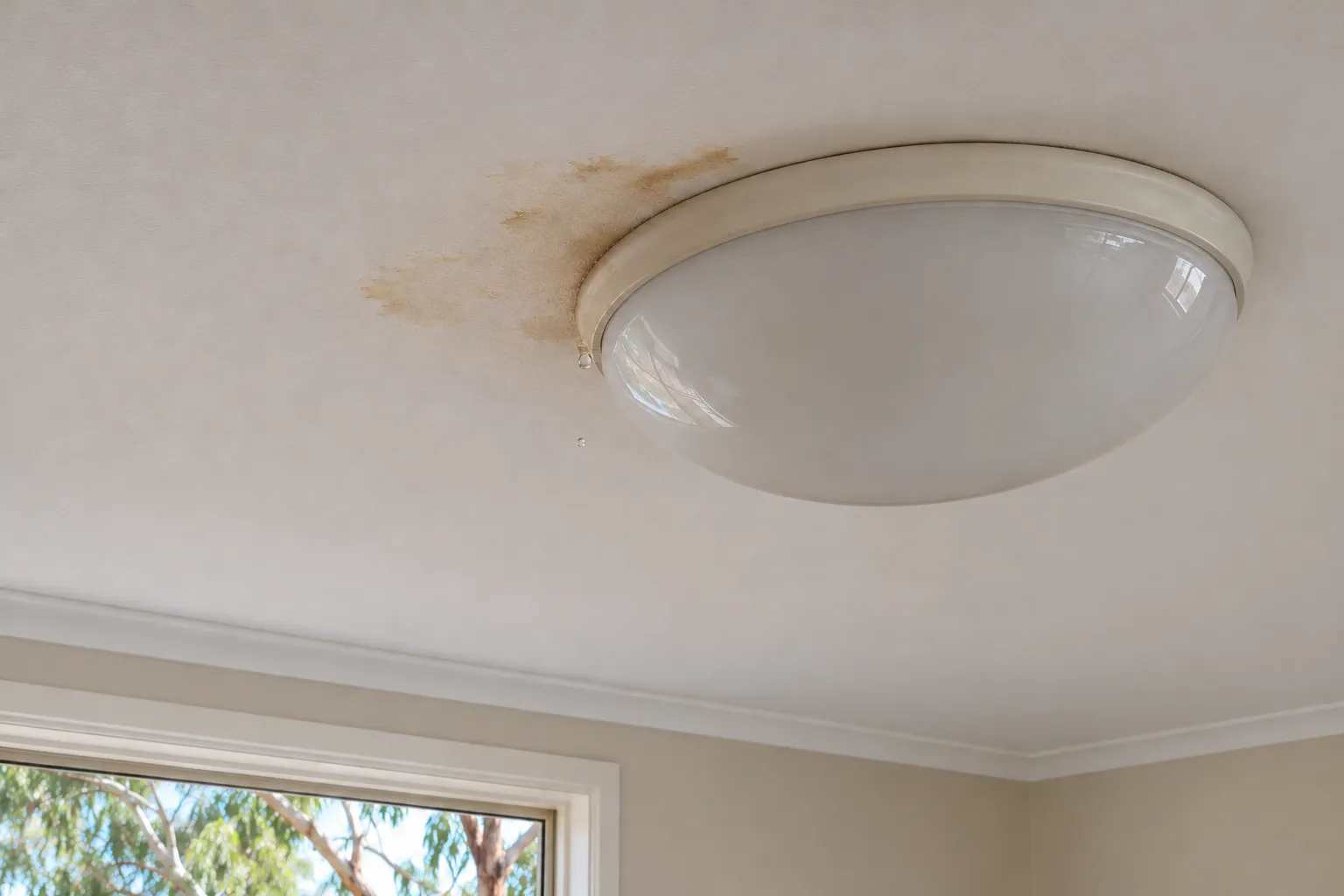
Water dripping through a ceiling light is more than a sign of a plumbing leak. It means water has reached an area containing electrical equipment, affecting components and wiring that are not visible from the room below. Even if the light continues working, that does not mean the installation is safe.
For Wollongong homeowners, knowing how to respond can prevent further hazards while the problem is investigated. Allround Electrical assists with urgent electrical concerns, including assessing equipment exposed to water. Understand what to do immediately, why fixing the plumbing leak is only part of the repair and what needs to happen before the affected light can be used again.
What Should Be Done If Water Drips Through a Ceiling Light?
Water dripping from a light fitting should always be treated as an electrical hazard rather than a routine household leak. Everyone should keep away from the fitting and surrounding wet area while urgent advice is obtained from a licensed electrician.
There is no need to identify the electrical fault before seeking assistance. Water emerging through or immediately around a light is enough reason to arrange an assessment, even if there are no sparks, unusual sounds or interruptions to the power supply.
Keep People Away From the Fitting and Wet Area
Children, visitors and pets should be kept out of the affected room or area. Nobody should stand directly beneath the fitting, particularly if the ceiling is stained, sagging or visibly holding water. A water-damaged ceiling can present additional hazards beyond the electrical installation.
The light fitting should not be touched, opened or covered to catch the dripping water. Nearby switches and other electrical equipment may also have been affected, so these should be left alone. Entering the ceiling space to investigate the leak or inspect wiring is equally unsafe.
Moving a ladder underneath the fitting for a closer look should also be avoided. Getting closer does not help establish whether the area is safe and could expose someone to wet surfaces or damaged equipment.
A wet or potentially affected switchboard should not be approached or operated. The electrician should provide advice about the immediate situation rather than homeowners attempting electrical isolation themselves. If there is fire, smoke or immediate danger, everyone should move to safety and call 000.
Arrange Urgent Professional Assistance
When requesting assistance, the situation should be described as water entering through a ceiling light rather than simply a bathroom or roof leak. The electrician should be told whether the water is still flowing, whether the ceiling is sagging and whether smoke, sparking or unusual sounds have been observed.

Only information that can be gathered safely should be reported. There is no need to investigate further to answer questions or identify the source of the leak. Homeowners can check their tradesperson’s licence through the NSW Government to confirm it is current and covers the electrical or plumbing work required.
For urgent local assistance, homeowners can contact experts through its emergency electrician Wollongong service. The water exposure should be explained clearly so the electrical concern can be assessed. A plumber should also be arranged to investigate the suspected plumbing source, with access and work sequencing.
If the dripping stops before assistance arrives, that information should be passed on to the electrician. However, the absence of further water does not make the fitting safe to use. The advice on what to do before electrical help arrives provides further information about keeping clear of electrical hazards while assistance is arranged.
Why a Stopped Leak Does Not Mean Electrical Damage Is Gone
Stopping the plumbing leak prevents more water from entering the ceiling, but it does not establish the condition of electrical equipment already exposed. A dry-looking ceiling and a light that still switches on provide little information about concealed moisture or internal damage.
Electrical safety after water exposure depends on a professional assessment of the affected installation. Waiting for the visible dripping to stop is not enough to establish whether the equipment can be used again.
Water Can Travel Beyond the Visible Drip
The point where water appears through a ceiling is not necessarily directly beneath the plumbing fault. Moisture can travel along building materials, pipes and cables before finding an opening around a light fitting. As a result, the visible drip may represent only part of the affected area.
Above the ceiling, water may reach light connections, separate lighting components or nearby wiring. Some electrical parts may also sit away from the visible fitting, depending on the installation.
Water can carry residue from the surfaces it passes over, potentially leaving moisture or contaminants inside components and connection points. These effects may not be visible from below, even after the plumbing leak has stopped.
A dry patch of paint therefore cannot be treated as electrical clearance. Household drying methods, a warm room or waiting a certain number of hours cannot establish if affected equipment is suitable for use. Applying heat to the fitting or opening it to help it dry should also be avoided.
A Working Light or Untripped Breaker Does Not Prove Safety
A light may continue operating after water exposure, but this does not mean its insulation, terminals or other components remain in suitable condition. Turning it on to check if it works only establishes that it produces light at that moment. It does not confirm that the fitting is electrically safe.
Similarly, a circuit breaker or safety switch that has not tripped does not certify that the installation is unaffected. Protective devices respond to specific electrical conditions, and their remaining on is not a substitute for inspection and testing.
If a protective device has operated, it should not be repeatedly reset to see whether the problem has cleared. The electrician should be told what happened so the affected circuit can be assessed. Repeated trial and error is among the electrical mistakes homeowners should avoid.
The Plumbing Repair and Electrical Assessment Solve Different Problems
A plumbing repair addresses the source of the water, while an electrical assessment determines what that water may have affected. Both may be necessary, and completing one does not automatically mean the other problem has been resolved.
The order of work depends on the hazards, safe access and professional advice. There is no single sequence that suits every situation when water is still entering an area containing electrical equipment.
Identifying and Stopping the Water Source
A licensed plumber investigates and repairs the plumbing fault. For an upstairs bathroom leak, this means identifying where the water is escaping rather than assuming the light fitting below marks the exact location of the problem.
Water can travel through ceiling materials and along building components before becoming visible. A leak that appears in a downstairs room may therefore originate somewhere else.
The plumber should know the affected light before attending the property. This allows the tradespeople involved to consider electrical concerns when arranging access and carrying out the work.
If the source is uncertain, it should be described as a suspected location rather than a confirmed diagnosis. Professionals can investigate and establish the actual source and extent of the problem.
Assessing the Affected Electrical Installation
An electrician determines which electrical equipment may have been exposed and what isolation, inspection or testing is required. The assessment may extend beyond the visible light fitting if the water's path suggests that nearby connections or wiring could also be affected.
The electrician and plumber may coordinate their work before either can complete the job. Electrical hazards may need to be made safe before certain areas can be accessed, while an ongoing leak may need to be addressed before the electrical assessment can be completed.
When comparing local electrical suppliers, homeowners should explain that the job involves water-exposed electrical equipment rather than simply replacing a light fitting. Also, ask what the initial attendance will cover, whether further access may be necessary and how any outstanding work will be explained.
How Will Homeowners Know When the Light Is Safe to Use Again?
An affected light should only return to use after a licensed electrician has assessed the relevant installation and advised that it is safe. Neither a repaired plumbing fault nor a dry-looking ceiling provides that assurance. NSW SES advises that electrical connections and appliances affected by water should be inspected by a licensed electrician before being used again.
The required work depends on the extent of the water exposure and the condition of the electrical components. Some incidents may involve a limited repair, while others require replacement of damaged parts or further investigation of concealed areas.
Inspection and Testing Before the Light Is Used Again
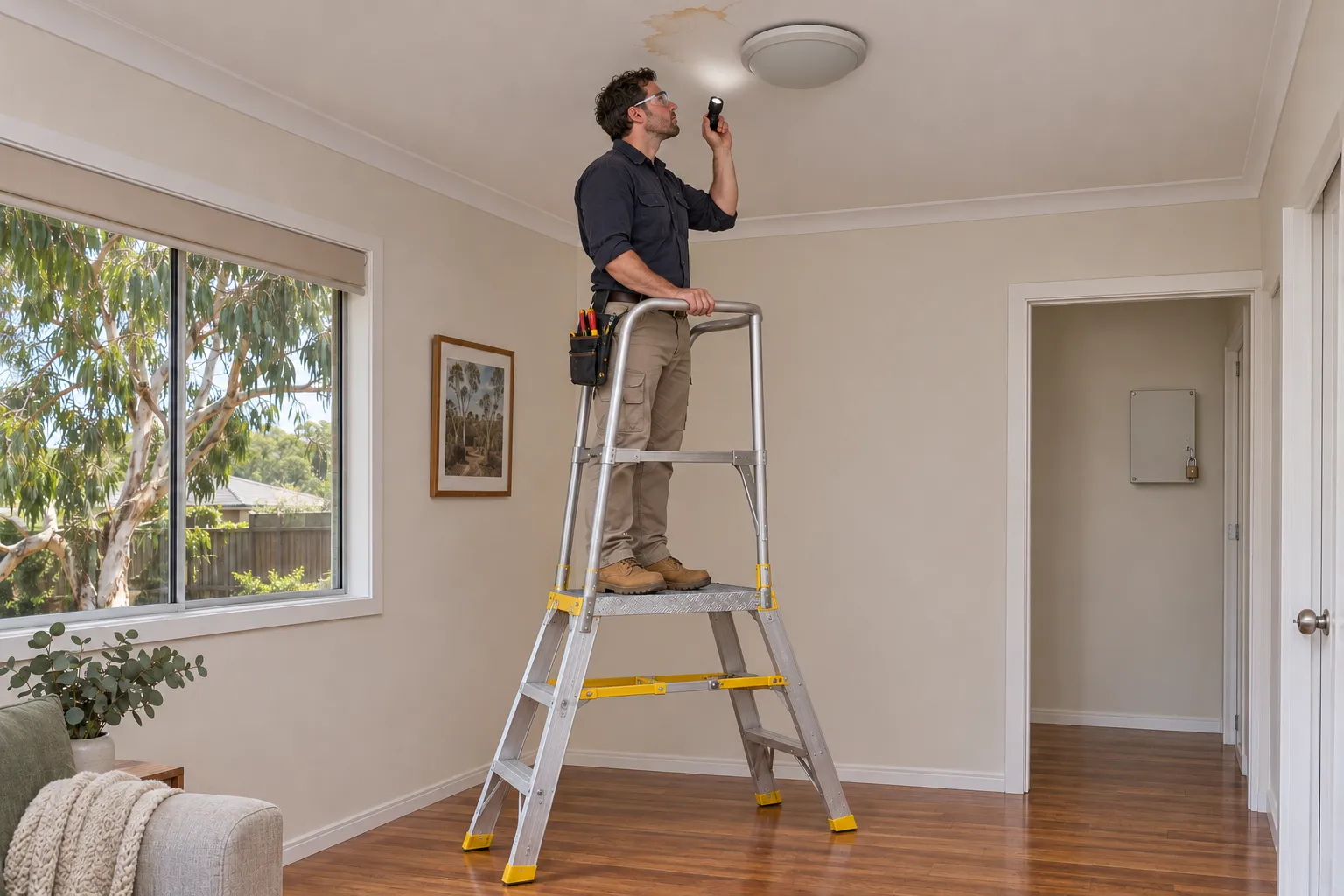
The electrician first needs to determine the likely extent of the water exposure. This involves considering the visible damage, the reported leak history and the electrical equipment in the affected area. Any access requirements must be managed safely and will depend on the installation.
Inspection and appropriate electrical testing identify conditions that cannot be judged from appearance alone. A clean-looking fitting may still have affected connections or insulation. Equally, a water mark does not automatically mean every nearby cable needs replacement.
Homeowners should ask the electrician to explain which equipment was assessed, what repairs were completed and whether anything remains isolated or unavailable for use. If further access or another visit is required, the affected areas or circuits that must remain out of use should be clearly identified.
Clarify whether the affected light can be operated again and whether any restrictions remain elsewhere in the property. This provides a clearer understanding of the electrical work completed than relying on a general statement that the leak has been fixed.
The broader principles behind electrical safety standards for homes and businesses explain why professional inspection matters beyond visible repairs.
When Water-Damaged Components Need Replacement
A water-damaged light fitting may need replacement if its internal parts, connections or insulating materials are no longer suitable for continued use. Some components cannot be adequately assessed or restored simply by allowing them to dry. The electrician should explain why replacement is necessary and which parts are affected.
Changing a light globe does not address water exposure elsewhere in the fitting or electrical circuit. Similarly, replacing the visible fitting may not resolve damage to connections above the ceiling. The repair must address the condition of the affected equipment rather than just the most obvious symptom.
However, not every water leak requires extensive rewiring. The electrician should explain what has been damaged, which components can remain and what findings support the recommended work. If concealed areas still require investigation, confirmed damage should be distinguished from anything that remains uncertain.
Get Professional Help for Water-Damaged Ceiling Lights
Water dripping through a ceiling light requires attention to the plumbing problem and the potential electrical damage. Even after the leak has stopped, concealed moisture and affected components can create hazards that are not visible from the room below.
Homeowners should keep clear of the affected area, avoid operating nearby electrical equipment and arrange professional assistance rather than attempting their own checks. Allround Electrical assesses water-exposed electrical installations and explains what repairs or further inspections may be needed before affected equipment returns to use. Addressing the electrical concerns properly is an important part of restoring safety after a ceiling leak.