
July 15, 2026
What Is a Point of Attachment and Why Does It Matter for Your Power Supply?
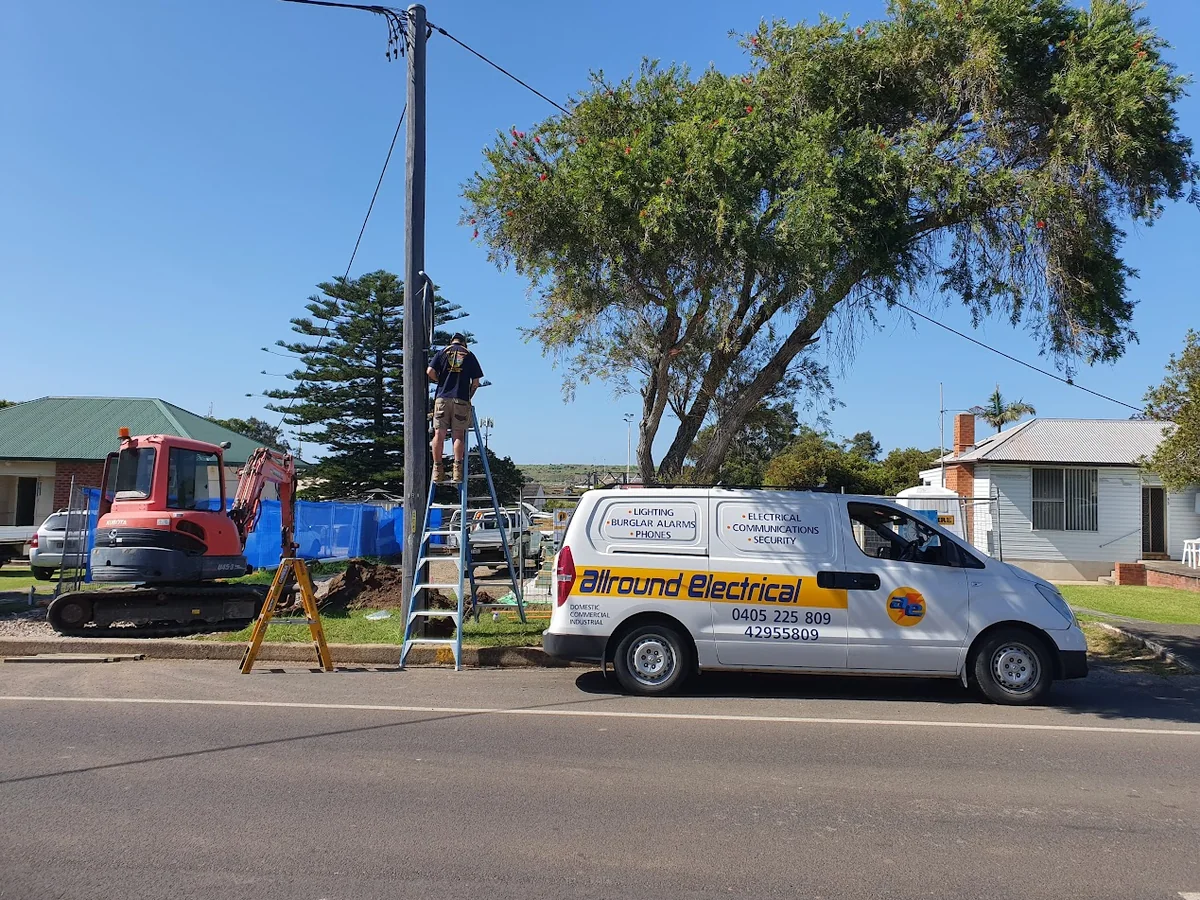
A property’s point of attachment is a critical part of the electrical supply system. Its location, condition and compliance directly influence electrical safety, supply reliability and the ability to carry out upgrades or repairs. When electrical work involves the incoming supply, a level 2 electrician in Wollongong is often required to ensure the work meets distributor requirements and Australian standards. For specialised connection, disconnection and supply upgrade services, Allround Electrical provides accredited expertise for residential and commercial properties.
Understanding how a point of attachment functions makes it easier to plan new builds, renovations and electrical upgrades while reducing the risk of costly delays, defect notices and safety issues. This article explains where a point of attachment is located, why it matters, the common issues that affect it and when specialist electrical services are required to keep the installation safe, compliant and dependable.
What Is a Point of Attachment?
A point of attachment is the place where the electricity distributor’s service line physically connects to a property. It acts as a handover point between the electricity network and the customer’s electrical installation, making it important for both safety and compliance.
For overhead supplies, this is usually where the aerial service cable from the street is fixed to the building or a support structure before continuing toward the main switchboard. Its location, condition and fixing strength all affect how safely and reliably power is delivered to the property.
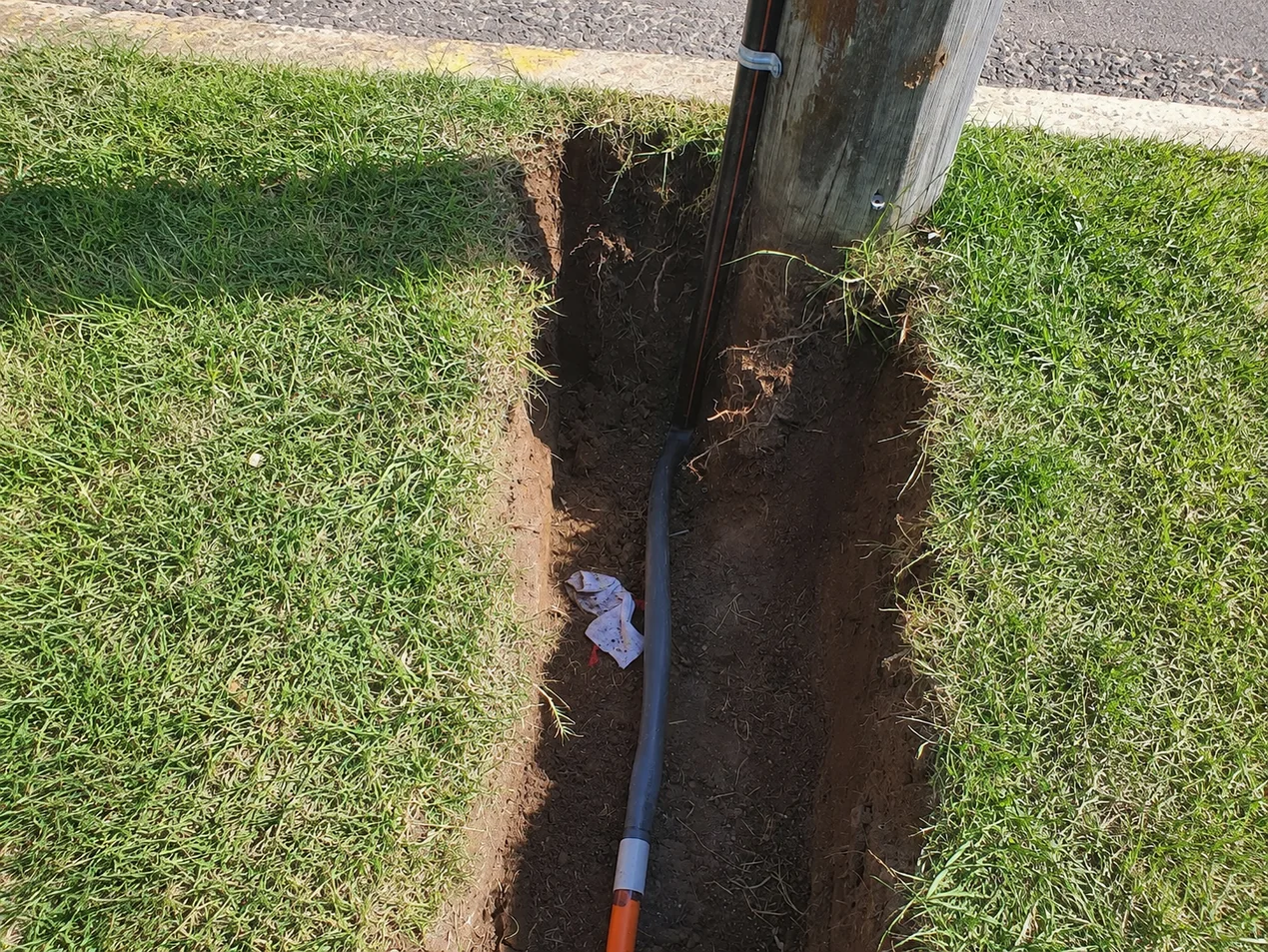
For underground supplies, there may not be a visible overhead attachment point. Instead, the key connection or termination point is usually located at a service pit, pillar, service fuse enclosure or meter box, depending on the property and distributor requirements. The same principle applies: it is the transition point between network assets and the customer’s installation.
Where the Point of Attachment Is Usually Located
The exact position of a point of attachment is set by network rules, service requirements and electrical standards. Location is not chosen at random. It must allow safe clearances from people, vehicles, structures, roofs, windows, balconies, pools and other services.
Although each property is different, most connection arrangements fall into a few common categories.
Overhead Supply on Houses
For homes supplied by overhead power lines, the point of attachment is usually positioned on the outside of the building near the front or side of the property. This allows the aerial service cable from the street to reach the building using the most direct and safe route.
Common positions include:
- A fascia board near the roof edge
- A gable end fixed to solid framing
- A wall-mounted bracket near the meter box
- A purpose-installed timber or metal bracket
The cable is secured to a clamp, bracket or insulator at this point, then continues through the consumer mains route to the main switchboard. The attachment must be high enough to maintain safe clearances over driveways, walkways, yards and roofs without the cable sagging too low.
The location must also keep the supply cable clear of windows, doors, verandas, balconies and accessible roof areas to reduce the risk of accidental contact. For this reason, attachment points are usually positioned away from upper-storey windows and outdoor living areas, even if a longer cable route is required.
Pole-Mounted and Private Pole Arrangements
On some properties, especially those set back from the street, the point of attachment may be on a pole rather than directly on the building. This is common where the building is too far from the network connection, where safe clearances cannot be achieved from the house, or where the existing structure is unsuitable for supporting the service cable.
Two common arrangements include:
- An aerial service cable running from the supply authority pole to a private pole, then underground to the building
- A private pole on the property with the service cable attaching at the top before continuing overhead to the structure
The formal connection point is generally where the distributor’s service line ends and the customer’s installation begins. The pole must be structurally sound and positioned to maintain required clearances from driveways, trees, sheds, fences and neighbouring properties.
Underground Supply to Buildings
For properties with an underground supply, the connection point is usually less visible. The supply cable may terminate at:
- A service pit or pillar near the front boundary
- A service fuse enclosure
- A meter box on an external wall
- A service termination point integrated with the main switchboard
From the street network, the cable runs underground to the relevant service equipment before continuing to the building. Because this equipment may contain live supply components, it should only be inspected, altered or worked on by a suitably licensed and accredited electrician.
What Is Connected at the Point of Attachment?
At or near the point of attachment, the service conductors are secured and directed into the consumer mains, which run to the main switchboard and meter. These components form part of the incoming electrical supply and must be installed in a way that can withstand mechanical strain, weather exposure and electrical load.
Typical components at or near this point may include:
- An aerial service bracket or hook for overhead lines
- Insulators or cleats to support and protect conductors
- Consumer mains cable or insulated overhead mains
- Service protection equipment, depending on the supply arrangement
- Earthing and bonding connections nearby, where required by standards
The fittings must be mechanically strong, weather-resistant and positioned to maintain specified clearances from roofs, gutters, windows, driveways, pools and other structures. Poor positioning or deteriorated hardware can lead to cable strain, water ingress, damaged insulation or unsafe contact points.
Why the Point of Attachment Is a Defined Responsibility Boundary
The point of attachment is also an important responsibility boundary. In general, the network business is responsible for the service line up to the approved connection point, while the customer is responsible for the electrical installation from that point into the property.
This boundary helps determine who arranges and pays for repairs, relocations or upgrades. If a bracket deteriorates, a fascia rots, a private pole becomes unsafe or clearances no longer meet requirements, the customer-side issue usually needs to be rectified before the distributor can safely reconnect or approve further work.
Any alteration to the point of attachment, such as moving it to a new bracket, relocating it to a private pole, converting from overhead to underground supply or increasing the available capacity, must comply with current service and installation rules. In many cases, approval from the local electricity distributor is also required before work can proceed.
Why the Point of Attachment Matters for Electrical Safety
The point of attachment is not just a mounting spot for power lines. It is a critical safety interface between the supply network and the property. If it is poorly located, damaged or incorrectly installed, it can create serious shock, fire and supply reliability risks before any issue appears inside the switchboard.
Understanding why this location is tightly regulated helps explain the rules that apply when upgrading a supply, relocating lines or adding larger electrical loads.
Protecting Against Electric Shock
The point of attachment must keep live conductors safely out of reach and away from normal movement around the property. Height and separation clearances are designed to reduce the risk of accidental contact with service cables, including when people are using ladders, carrying long tools or accessing balconies, decks or roof areas.
If the point of attachment is too low or too close to windows, balconies or accessible roofs, there is an increased risk of contact with live conductors. Tools, ladders or metal building elements may also bridge the gap between the line and a person or conductive surface.
Correct insulators, fixings and terminations help prevent exposed conductive parts from becoming live if a conductor loosens, moves or fails.
Reducing Fire and Mechanical Hazards
Service cables are exposed to wind, cable weight, temperature changes and movement from nearby vegetation. The point of attachment must be strong enough to carry that load without loosening, splitting or pulling away from the structure.
Incorrect positioning or poor fixings can lead to:
- Damaged insulation from rubbing on gutters, bargeboards or roof edges
- Overheating or arcing at loose terminations
- Conductors sagging into contact with roofs, metalwork or vegetation
- Excessive strain on consumer mains or service equipment
Any of these issues can become an ignition source around timber, eaves, dry leaf build-up or combustible materials. Keeping the point of attachment clear of sharp edges, gutters and likely tree growth is an important part of reducing fire risk.
Supporting Compliance and Network Reliability
Electricity distributors and electrical standards set strict requirements for how and where a point of attachment can be installed. These requirements cover clearances from the ground, trafficable areas, pools and spas, separation from communication cables and the strength of the fixing point.
A non-compliant point of attachment can lead to refused connections, defect notices, delayed upgrades and increased outage risk. Correct design and installation protect the individual property while also reducing the chance of faults affecting the wider network.
Common Problems That Can Affect the Point of Attachment
The point of attachment often sits high on an exterior wall, fascia or pole, which means problems can go unnoticed until power becomes unreliable or a defect notice is issued. Many issues develop slowly through weather exposure, building movement or poor previous workmanship.
Recognising the common warning signs helps property owners arrange an inspection before the issue becomes more serious.
Weathering, Corrosion and UV Damage
Exposure to sun, rain, salt air and temperature changes can break down metal and plastic components at the point of attachment. Corroded brackets, screws, eyebolts or hooks may weaken the fixing until it can no longer safely support the service cable.
Rust staining around the fitting, flaking metal or visibly deteriorated hardware can indicate that the attachment is no longer secure. UV exposure can also make insulating covers and older cable sheathing brittle. Once insulation cracks, moisture may enter the cable or connection point, increasing the risk of arcing, short circuits or supply faults.
In coastal or industrial areas, corrosion and UV damage can progress faster, so periodic checks are especially important.
Structural Movement and Loose Fixings
The point of attachment relies on a solid structure, such as a sound fascia, rafter, wall or private pole. Over time, timber can rot, split or pull away from the roof frame, especially where gutters overflow or roof leaks occur.
Heavy wind loading on overhead service lines can also loosen screws, bolts and brackets. A sagging service cable, unusually tight cable, tilted bracket or visible movement during windy conditions may indicate that the fixing is no longer secure.
In severe cases, the cable can pull away from the building or place dangerous strain on the connection to the consumer mains.
Vegetation, Physical Damage and Non-Compliant Alterations
Tree branches that grow into or above the service line can rub on insulation, damage the cable or place extra pressure on the point of attachment during strong winds. Even if branches do not break, constant movement can fatigue conductors and stress the fixing point.
Other problems can arise from building works, roof repairs, ladder impact or unauthorised alterations. Moving a cable to a different hook, adding makeshift supports or adjusting service lines without approval can create unsafe and non-compliant arrangements.
Any visible damage to brackets, insulators, fascias, poles or cable entry points should be inspected promptly by a licensed electrician. Unexplained changes in cable tension or clearance should also be treated seriously.
When Point of Attachment Issues May Lead to a Defect Notice
A damaged, incorrectly installed or non-compliant point of attachment is a common reason for an electrical defect notice. Electricity distributors treat this connection as critical because a fault at this location can affect the property, nearby properties and network infrastructure.
Understanding the issues that commonly trigger a defect notice can help property owners organise repairs before supply is disconnected or safety is compromised.
Structural Deterioration or Damage
Defect notices may be issued when the structure supporting the point of attachment is no longer sound. This may involve the fascia board, wall, meter box, bracket or private power pole where the service cable is fixed.
Common triggers include:
- Rotten or cracked timber fascias that cannot hold brackets or clamps securely
- Rusted or corroded brackets, eyebolts or hooks
- Loose fixings that allow the service cable to move or pull away from the building
- Damaged, leaning or deteriorated private poles
- Poorly supported service cables placing strain on the connection
When structural integrity is in doubt, the distributor may classify the issue as a defect because the cable could detach, live conductors could fall within reach or network equipment could be placed under excessive strain.
Clearance and Sagging Cable Problems
Safe clearance between the service cable and the ground, roof and surrounding structures is a strict requirement. A defect notice may be issued if minimum clearances are not maintained.
Common clearance problems include:
- Sagging service cables sitting too low over driveways, walkways or yards
- Cables positioned too close to windows, balconies, decks or verandas
- Conductors contacting or nearly contacting roofs, gutters or metal structures
- Trees or vegetation growing into or rubbing against the service line
- New building works reducing the clearance around an existing attachment point
These issues increase the risk of electric shock, vehicle contact, storm damage and supply faults. A Level 2 electrician may be required to reposition the point of attachment, replace hardware, adjust the connection or complete other approved rectification work.
When You May Need a Level 2 Electrician
A point of attachment sits at the boundary between the electricity network and a property. Any work that affects that connection is tightly controlled and cannot usually be handled by a standard electrician. This is where a Level 2 Accredited Service Provider becomes essential.
A Level 2 electrician is authorised to carry out specialised work involving the network connection, service lines, consumer mains and metering. Engaging the correct level of accreditation is critical for safety, compliance and avoiding delays or refusal of service from the electricity distributor.
New Connections and Supply Upgrades
A new build, major renovation or increased electrical demand may require a new connection or an upgrade to the existing supply. This may involve installing a new point of attachment, relocating an existing one or changing the consumer mains.
Typical situations include:
- Connecting a newly built home, commercial premises or granny flat
- Increasing supply capacity for larger electrical loads
- Installing equipment such as ducted air conditioning, EV chargers or larger machinery
- Converting from single-phase to three-phase power
- Upgrading consumer mains or service protection equipment
A Level 2 electrician can liaise with the distributor, assess the most suitable connection arrangement, install or modify the required service equipment and ensure the work meets network and Australian standards before the supply is energised.
Defective or Non-Compliant Points of Attachment
Electricity distributors can issue defect notices when a point of attachment is unsafe, damaged or non-compliant. These notices often include a strict timeframe for rectification. If the issue is not resolved, the property may be disconnected until the defect is cleared.
Common reasons for defects include:
- Rusted or loose brackets and hooks
- Damaged service cable insulation
- Inadequate clearance from roofs, balconies, driveways or vegetation
- Rotten, cracked or unsuitable fascias
- Unsafe private poles
- Unauthorised relocation or DIY alterations
Where the service line needs to be disconnected, moved, repaired or reconnected, a Level 2 electrician is generally required. They can complete the rectification work, test the installation and provide the required documentation so the defect can be cleared with the distributor.
Disconnection, Reconnection and Relocation Work
Any work that requires temporarily removing, moving or reconnecting the network supply to a property usually requires a Level 2 electrician. This often occurs during roofing works, fascia replacement, major renovations, extensions or upgrades to private poles.
Common situations include:
- Temporarily disconnecting supply so roof or fascia works can be completed safely
- Moving the point of attachment from an old fascia to a new bracket
- Relocating the point of attachment to a private pole
- Converting from overhead to underground supply
- Decommissioning an unsafe or outdated connection arrangement
A Level 2 electrician can isolate the supply, carry out approved modifications, reconnect the service and test the installation so the property can be safely re-energised.
Maintaining a Safe and Compliant Point of Attachment
The point of attachment plays an essential role in the safety, compliance and long-term reliability of every electrical installation. Correct positioning, suitable hardware and ongoing maintenance help protect the incoming supply, reduce mechanical stress and minimise the risk of electrical faults, defect notices and unnecessary disruptions.
As buildings age or electrical demands increase, maintaining a compliant point of attachment becomes more important for residential and commercial properties. Projects involving new connections, supply upgrades, relocations or defect rectification require specialist knowledge and the appropriate accreditation to satisfy distributor requirements.
Engaging experienced professionals helps ensure every aspect of the work is completed safely, efficiently and in accordance with current standards.