
November 18, 2026
Demolition Needs a Planned Electrical Disconnection
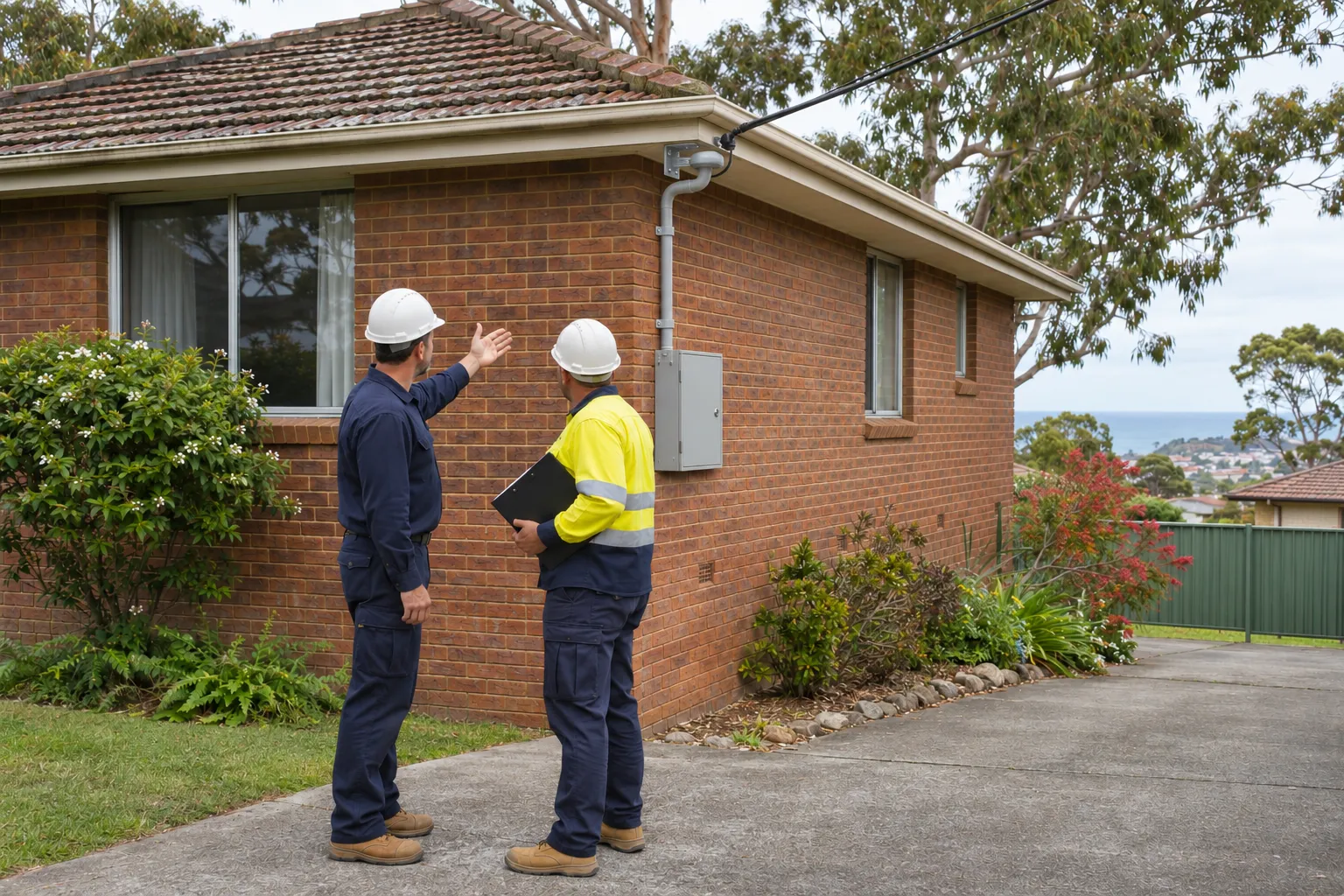
A demolition quote may cover removing a building, but you also need to establish what happens to the electricity supplying it. Switching off the lights or the main switch does not mean every cable near demolition equipment is safe to disturb. The incoming supply and any electrical infrastructure affected by the work must be assessed before demolition begins.
If you are planning a demolition or substantial renovation in Wollongong, the electrical scope depends on more than whether the house is coming down. You need to consider where the supply enters, which structures will remain and whether construction crews need electricity afterwards. Allround Electrical can assess the electrical requirements and determine whether Level 2 work is needed, giving you a clearer picture of what must happen before demolition proceeds.
Why Isn't Switching Off My Power Enough for Demolition?
Turning off a switchboard and disconnecting a building from its incoming electricity supply are different things. For demolition, the important question is not simply whether appliances have stopped working. It is whether the electrical infrastructure affected by the demolition has been properly assessed and made safe for the planned work.
Electrical disconnection must be arranged through appropriately licensed and authorised professionals. You should never operate equipment, open enclosures or investigate cables yourself to establish whether a building is safe to demolish.
The Incoming Supply May Remain Live
Electricity reaches a property through incoming supply infrastructure before passing through the equipment that controls the building's circuits. Depending on the arrangement, parts of that incoming infrastructure can remain live even when the main switch is off.

An overhead connection may attach to the building being removed. An underground supply may enter through an area that will be excavated or disturbed. Neither arrangement can be considered safe simply because there is no power at a socket inside the house.
This distinction matters because demolition affects more than internal fittings. Machinery can pull down walls, remove roof structures and disturb the ground around cable routes. The electrical assessment needs to account for these activities rather than treating the project as an ordinary period when a building is unoccupied.
A metre that appears inactive, an empty house or a closed electricity account also does not establish that the physical supply has been disconnected. Billing arrangements and electrical disconnection are separate matters. Your demolition contractor needs confirmation of the electrical status of the work area rather than relying on assumptions.
Isolation and Supply Disconnection Serve Different Purposes
Isolation can form part of making electrical work safe, but its scope depends on what is being isolated and where. A circuit isolated for renovation work is not necessarily equivalent to a property prepared for complete demolition. The required arrangement must match the actual work and the electrical infrastructure exposed to it.
In NSW, some work involving the connection between a property and the electricity network must be completed by an appropriately accredited and authorised Accredited Service Provider (ASP). The NSW Accredited Service Provider scheme explains the different accreditation levels and their scope. A Level 2 electrician can undertake specific supply-side work, including certain service line disconnections, alterations and reconnections.
Whether Level 2 involvement is required depends on the existing supply and the work proposed. Level 2 electrician Wollongong service is a relevant starting point for discussing these requirements before demolition is booked.
The Demolition Footprint Determines the Electrical Scope
The electrical work should follow the physical boundaries of your demolition, not just the name given to the project. Removing an entire house creates different supply requirements from removing a rear extension while keeping the front rooms intact.
Your electrician needs to understand what will be demolished, what will remain and where machinery or excavation may affect electrical infrastructure. A simple description such as 'partial demolition' rarely provides enough detail on its own.
Whole-Building Demolition
If an entire house is being removed, the assessment needs to consider the supply connection serving that building, including where it enters and what equipment is attached to the structure. The aim is not merely to stop electricity reaching the existing rooms. It is to address electrical infrastructure that could be affected as the building comes down.
The position of the connection matters. A supply attached to a roof or wall must be considered alongside the demolition of that structure. An underground route also needs attention where excavation, footing removal or other ground disturbance forms part of the work.
Removing the house does not automatically establish what should happen to every electrical asset elsewhere on the property. A retained garage or another supplied area may complicate what initially looks like a straightforward whole-house disconnection. Those relationships need to be understood before the scope is agreed.
Partial Demolition Besides a Retained Building
If you are removing an attached section, electrical circuits may cross between the retained and demolished parts. A circuit serving a room you intend to keep may travel through a ceiling or wall scheduled for removal. The physical location of a light or socket does not reveal its full cable route.
Partial demolition can require more investigation and circuit separation than the size of the removed area suggests. Your licensed electrician needs to assess how the retained installation can be safely separated from the demolition work and whether alterations are necessary before either proceeds.
Changes around the switchboard may also affect the scope, but a switchboard alteration does not automatically establish whether supply-side work is needed. The distinction is explored further in when a switchboard upgrade needs Level 2 involvement.
If the demolition boundary changes during design, the electrical assessment may need revisiting. Keeping an extra room or removing another wall can alter which cables, equipment and supply routes are affected, even if the overall project still carries the same description.
Can I Keep Electricity Available Elsewhere on the Property?
You may want a garage, occupied section or another retained area to stay powered while demolition takes place. That may be possible, but it cannot be assumed simply because the structure itself is staying.
The key issue is how electricity reaches that area. A building outside the demolition footprint may depend on cables or equipment inside it, so continued supply must be checked before you plan around it.
Retained Garages and Occupied Areas Need Assessment
A garage can look independent while receiving its electricity from the main house switchboard. If that house is being removed, the garage's supply arrangement may also be affected. The same issue can arise where an occupied part of a home relies on circuits running through a section being demolished.
Your electrician should establish the relationship between the retained area, its supply route and the equipment controlling it. Depending on the findings, retaining electricity may involve alterations, a different supply arrangement or a period without power. An existing connection cannot simply be assumed suitable for reuse.
Provide your plans and explain which areas you want to keep operational, then leave the identification and assessment of the installation to a licensed electrician. Visible fittings provide only part of the picture, where cables are concealed within walls, ceilings or the ground.
Shared Supply Arrangements Can Change the Plan
Where more than one area relies on shared electrical equipment, disconnecting one part can affect another. The relationship may involve a common switchboard, shared cable routes or equipment positioned on the building being demolished. What appears to be a separate space may not have an electrically independent supply.
The electrician and demolition contractor need a consistent understanding of what will be disconnected, what will remain supplied and where electrical infrastructure will remain. Any arrangement intended to preserve power to retained areas also needs to be considered as the worksite changes.
Before accepting a proposal, ensure maintaining power to retained areas has actually been assessed or is merely excluded from the quoted work. A lower-priced disconnection proposal may cover a different outcome from one that includes alterations to preserve a suitable supply.
For broader information about work involving incoming electrical connections, what can go wrong with Level 2 electrical work provides useful context. Your proposal should describe any retained supply arrangements clearly enough that they are not confused with permission to disturb nearby electrical infrastructure.
Temporary Site Power Is a Separate Design Decision
Disconnecting the old building does not automatically provide electricity for the construction work that follows. Temporary construction power is a separate planning requirement, with its own demands, location constraints and coordination needs.
If your builder expects electricity to be available on site, establish how that supply will be assessed and arranged before demolition removes the existing installation. Do not assume that a retained socket or the old house connection will be suitable.
Construction Equipment Creates Different Supply Needs
The electricity previously used by a household may not reflect the demands of construction equipment. The equipment involved, the number of items operating together and the stages of the build all influence the supply assessment.
The assessment may need to consider whether single-phase or three-phase power is suitable, the available supply capacity and whether multiple trades will need electricity at the same time. These requirements should be established before temporary equipment is installed.
Temporary power should be designed and installed by licensed professionals for the arrangement required. It is not a matter of improvising with extension leads from whichever part of the property still has electricity. An available power point does not establish that the supply is suitable for the worksite or its equipment.
SafeWork NSW outlines the electrical requirements for construction and demolition sites, including guidance on construction wiring, site switchboards and equipment testing.
When comparing suppliers, check whether temporary power is included, excluded or subject to a separate assessment. A proposal for permanent disconnection of the old building may properly stop at that task. It should not be read as a promise that construction electricity will be available afterwards.
Supply Placement Must Suit the Changing Worksite
Location affects whether a temporary supply remains practical throughout the project. Equipment positioned clear of the demolition may later conflict with excavation, construction access or the new building footprint. Its placement must reflect the planned sequence, not simply an empty spot on the day of installation.
The assessment should consider machinery movements, access to electrical equipment and how the supply can be protected from site activities. These are coordination matters for the experts, not choices to make solely on convenience or the shortest apparent cable route.
A retained garage may appear to offer a convenient power source, but that does not establish that it can support construction activities. Its existing supply, condition and relationship to the demolished building still need assessment. Continued electricity for the garage and a suitable construction supply are not necessarily the same outcome.
Proposed changes to access or building layout should be raised before they affect the electrical arrangement. If supply equipment needs to move or electrical demand changes, the responsible professional needs an opportunity to reassess it rather than having site crews adapt the arrangement themselves.
The Supply Work Belongs Early In the Demolition Programme
Electrical assessment is most useful while the demolition sequence can still be adjusted. Leaving it until machinery is booked can expose dependencies that were not visible in the demolition quote, particularly where incoming connections or retained buildings are involved.
Early planning does not mean every project requires the same work or takes the same time. It means establishing your property's requirements before treating the demolition date as settled.
Arrange Assessment Before Demolition Dates Are Fixed
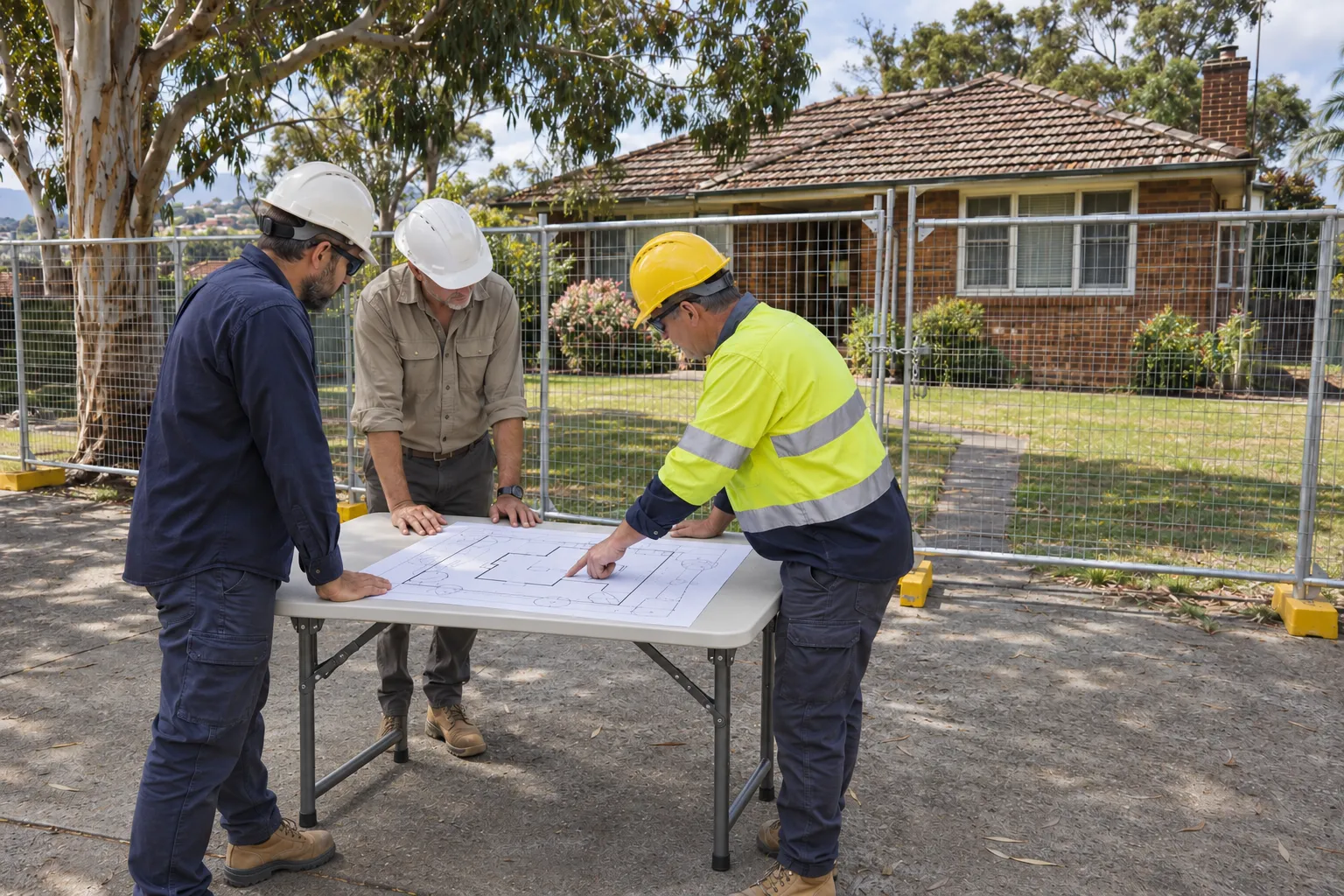
Give the electrician a clear picture of the proposed demolition boundary and what you expect to remain operational. Plans showing retained structures and future construction areas help explain the intended outcome, although the existing supply arrangement still needs professional assessment.
The initial discussion should cover the sequence of physical work: what must happen before demolition, what can remain during it and what supply is needed afterwards. This is more useful than requesting a disconnection price without explaining whether a garage must stay powered or temporary construction electricity is expected.
Confirm who is responsible for arranging the relevant disconnection process. Depending on the property and network requirements, this may involve your electricity retailer, the local electricity distributor and an appropriately authorised ASP.
Before accepting a proposal, ask for a written breakdown covering:
- Which incoming supply components need to be disconnected, removed or altered.
- Whether internal circuits or switchboard changes are included.
- Whether electricity can remain available to retained buildings.
- Whether temporary construction power is included or requires a separate quote.
- Which network approvals, inspections or other arrangements are required.
- What work is excluded, and which parties are responsible for completing it.
These details make it easier to compare like-for-like proposals without assuming that the shortest quote covers the entire project.
Allow for Coordination Beyond the Demolition Crew
Depending on the supply arrangement and required work, coordination may extend beyond your electrician and demolition contractor. Network approvals, distributor requirements, metering arrangements or other supply-related steps may be necessary. Their involvement and timing should be established for the actual project rather than assumed from another property's experience.
Site access also affects the sequence. The relevant electrical work must be coordinated before demolition removes access to equipment or exposes infrastructure to damage. Equally, the demolition crew needs clear confirmation of the electrical status of its work area before proceeding.
Choose a supplier who can explain which parts of the job fall within their scope and what depends on other parties. The value of hiring a local Wollongong electrician includes having an accessible point of contact for discussing site conditions and coordinating the electrical component of the project.
Arrange Your Demolition Electrical Work
Preparing a property for demolition involves more than switching off the main power. The incoming supply, retained structures, underground cables and future construction requirements all influence the electrical work needed before machinery arrives.
Planning these details can avoid unexpected complications, coordinate the right professionals and establish what will happen to the property's electricity throughout the project. It also makes it easier to understand what a disconnection quote includes and if additional work will be required.
If you are planning a demolition or substantial renovation, Allround Electrical will help you assess the electrical requirements and discuss whether Level 2 services are needed. Contact the team to discuss your property, proposed demolition scope and supply arrangements before scheduling the work.