
November 19, 2026
Can I Control One Light From More Than One Doorway?
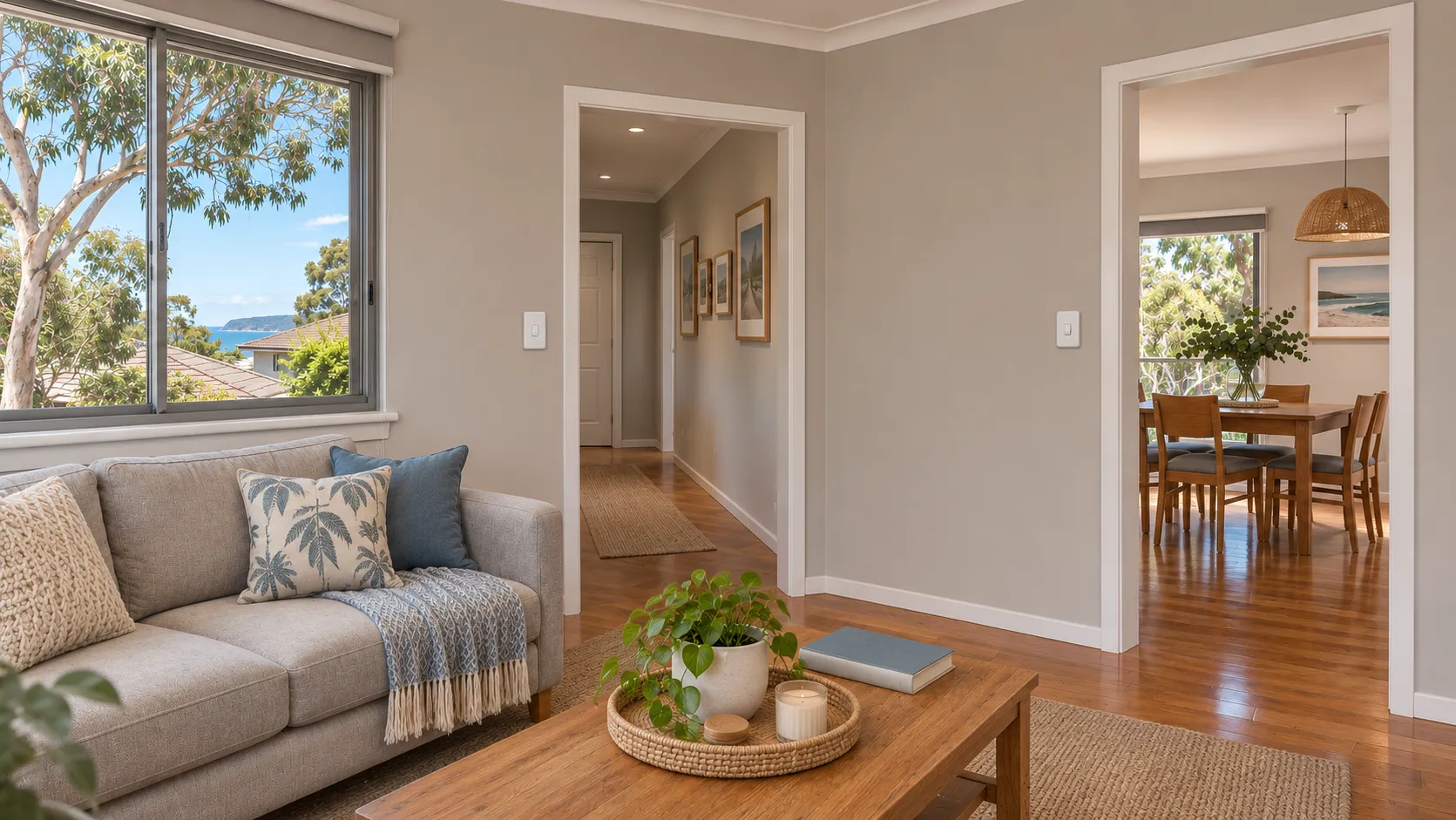
You enter a room through one doorway, cross to the light switch and then walk back to where you wanted to sit. Later, you leave through a different door and face the same inconvenience. Adding another switch could make everyday lighting much easier to manage without installing additional light fittings.
If you are considering this improvement in your Wollongong home, Allround Electrical assesses your existing installation and discusses suitable switching options. The right approach depends on your wiring, wall access and preferred controls, whether you want conventional switches or a wireless alternative.
Where Would I Actually Use Another Light Switch?
Another switch is useful wherever your normal route takes you past a doorway without convenient lighting control. The aim is to let you turn the light on when you enter and off when you leave, without retracing your steps.
Before choosing a position, think about the routes you actually use. A switch that looks well placed on a floor plan can still end up hidden behind a door or blocked by furniture.
Rooms With Two Entrances and Hallways With Several Exits
A living room with two entrances is a familiar example. You might enter from the hallway in the evening but leave through the other doorway later. With a control at each entrance, you do not need to cross the room to reach the original switch.
Hallways can benefit for a similar reason. If several rooms open onto a long passage, a single switch at one end may not serve everyone well. An additional control near a frequently used exit can make the lighting easier to manage without changing the fittings themselves.
A bedroom may also benefit from control at the doorway and besides the bed. The important question is not how many switches a room could accommodate, but which positions would remove a repeated inconvenience.
Adding another switch is different from adding another light. An extra control point changes where you operate the existing lighting. It does not increase brightness, fix shadows or create a separately controlled lighting zone. If your concern is that the room remains too dark, that needs a different discussion with your electrician.
Switch Positions That Follow How the Household Moves
Walk through the space as you normally use it, including with the doors fully open. Notice which side of the doorway you naturally reach towards and whether a cupboard, curtain or piece of furniture would obstruct that spot.
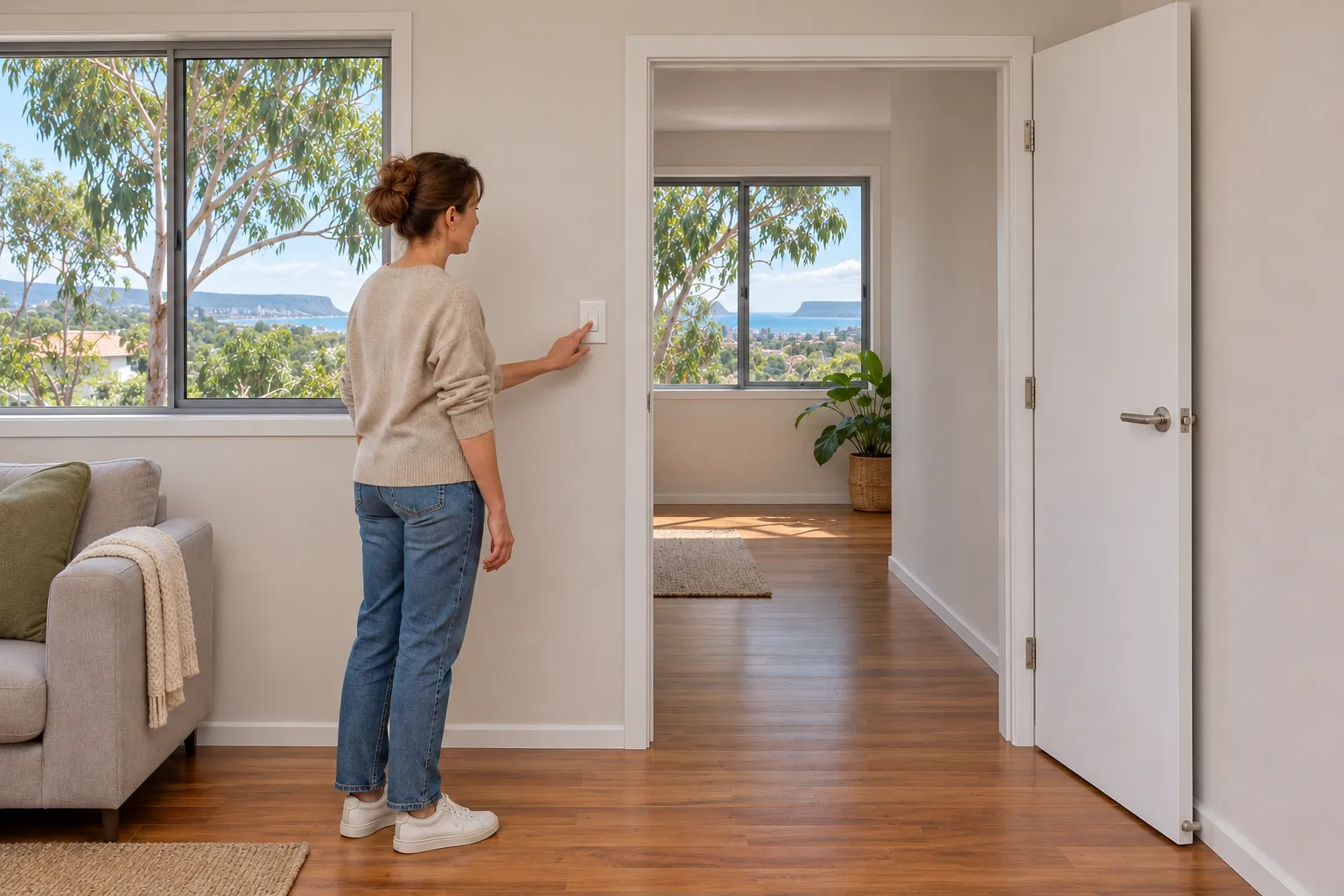
Consider evening routines as well as daytime movement. A route that seems unimportant during daylight may be the one you use most often after dark. Different household members may also enter and leave the room in different ways.
The position should be comfortable to reach and consistent with nearby controls where practical. Placing a new switch close to an existing group can look tidy, but not if it makes the light difficult to identify or requires an awkward reach around a door.
YourHome’s guidance on the accessible positioning of switches and controls provides useful background when planning locations that suit different household members.
You can describe the desired location without deciding how the wiring will get there. Marking the preferred area on a room photo can help communicate your intention. A licensed electrician can then check whether that position is practical or suggest a nearby alternative that preserves the convenience you want.
How Multiple Switches Control the Same Light
Multiple light switches can operate one light, or one group of lights, without either control being the permanent master. In a conventional arrangement, operating either switch changes whether the light is on or off.
The terminology can sound more complicated than the everyday experience. You do not need to understand the wiring design to use it, but knowing the difference between two control points and several will explain what you need.
Two Control Points Compared With Three or More
Conventional two-way light switching allows the same lighting to be controlled from two positions. For example, you can switch a hallway light on at one end and off at the other. The next person can then operate either switch to turn it on again.
There is no required sequence. You do not have to return one switch to a specific position before the other will work. That independence is what makes the arrangement useful in rooms with more than one entrance.
For three or more conventional wired control points, an electrician typically uses an arrangement that includes intermediate switching. In a traditional setup, two two-way switches are installed at the ends of the circuit, with one or more intermediate switches positioned between them. Each control point can then change the state of the same light.
The additional positions affect the installation design. A request for three controls is not simply a request to duplicate an ordinary switch three times. Your electrician must assess the existing arrangement and select suitable components and wiring methods.
Also, distinguish control points from lighting groups. Three switches operating one hallway light are different from three switches that separately operate hallway, living room and bedroom lights. Be explicit about whether every new control should operate exactly the same fittings.
Why the Switch Position May Not Show Whether the Light Is On
With a single conventional switch, you may be used to associating one rocker position with the light being on. In a multi-location arrangement, that visual shortcut may no longer apply.
The light's state depends on the combined arrangement, not the position of one switch alone. After someone operates the control at the other doorway, your nearby switch may remain in the same physical position even though the light has changed state.
That is normal operation, not necessarily a sign that the switches have been installed incorrectly. You operate the switch once to change the light's current state rather than trying to match a fixed up or down position.
Some electronic controls use push-buttons or other interfaces instead of conventional rockers. Their behaviour and indicators vary, so ask your electrician to explain how the proposed controls will work. This is useful if you want new and existing switches in the same room to feel consistent in everyday use.
Can I Add Another Control Without Opening the Walls?
Sometimes an extra control can be added with little disturbance to wall finishes. In other homes, the available cable routes or the existing electrical equipment make the work more involved. A wireless option may reduce the need for a cable to the new switch position, but it does not automatically remove all electrical work.
The right comparison is between complete, compatible arrangements. A convenient-looking wall control is only one part of the system that must operate your light reliably.
Existing Cable Routes and Wall Access Affect the Options
For an additional wired switch, access above, below or behind the proposed location can influence the installation. Wall construction, existing cable paths and the light’s position all matter. Your electrician must assess these conditions rather than assume that a nearby doorway will be simple to reach.
If walls are already open during renovations, mention this before they are closed. That access may make a preferred wired location more practical. In a finished room, ask what disturbance is likely and if any making good will be needed afterwards.
This explanation of concealed wiring and cable-hiding considerations provides useful background for discussing how the finished installation should look. Choosing an unobtrusive result still requires a licensed electrician to assess suitable cable routes and carry out the electrical work.
The NSW electrical safety requirements explain why electrical wiring work must be completed by a licensed electrician and supported by appropriate compliance certification.
Wireless Controls Still Need Compatible Equipment
Wireless light controls send a command rather than relying on a new switching cable between every control point. Depending on the arrangement, a compatible receiver or controller operates the light, while a separate wall control provides the additional location.
Some wireless wall switches communicate with a receiver installed near the light fitting or existing switch. Others form part of a powered control system that does not rely on a replaceable battery at the wall control. The equipment selected determines how the system communicates and what installation work is required.
Wireless switching does not necessarily mean smart-home integration. Some systems provide straightforward wall-to-wall lighting control without requiring a phone app, internet connection or central smart-home hub. Others offer additional features such as remote operation, scheduling and automation.
The receiver, existing switches and lighting must work together. Some installations may need different control equipment or changes near the fitting or existing switch. Wireless therefore does not necessarily mean no wall access, and it does not mean every existing fitting can be adapted.
Dimming adds another compatibility check. The lamp must be dimmable, and its driver must suit the proposed dimmer and control system.
Battery Changes and Operation Without Internet
Some wireless wall controls use replaceable batteries, while others receive power through their electrical installation. Before choosing a battery-operated option, know the expected battery life, how a low battery is indicated and what happens when the battery runs flat.
Also ask if basic switching works without an internet connection. Wireless communication within the home is not necessarily the same as internet-dependent control, but behaviour varies between systems.
Confirm what remains usable if the internet is unavailable or an optional central device is offline. For a light used every evening, dependable operation from the wall should be a clear part of the proposal, not an assumption based on the word wireless.
Controls That Stay Straightforward for Everyone
The best arrangement makes sense to the people using it, including someone who has never visited your home before. Extra features are only useful if switching the light remains quick and predictable.
Prioritise accessible physical controls, clear separation between lighting groups and consistent behaviour at each doorway. A small improvement to one room does not need to become a whole-home automation project.
Physical Switches Rather Than Phone-Only Operation
A phone can provide an optional way to operate compatible lighting, but it is a poor substitute for an obvious control besides the entrance. You should not need to find a device, open an app or explain an account login simply to turn on a room light.
Physical controls are valuable in shared spaces. Household members and visitors can use the lighting without needing access to someone else's phone. If a proposed arrangement includes an app, ask if the wall controls still provide all the basic functions you need.
Keep gestures and button behaviour straightforward. A control with several press patterns may offer flexibility, but the everyday action should be clear. Ask for a demonstration of switching and dimming before deciding whether the interface suits your household.
Consistent Dimming and Clear Control of Each Lighting Group
If you want dimming from more than one location, say so at the start. Ordinary dimmers cannot simply be duplicated on the assumption that they will work together. Multi-location dimming needs compatible controls designed for that arrangement.
Not every LED lamp or fitting supports dimming. Even when a light is labelled dimmable, its driver and the selected dimmer must be compatible. Using unsuitable equipment can cause flickering, limited dimming range, buzzing or unreliable operation.
Ask whether every location will allow both switching and dimming, or some positions will provide switching only. Also check what happens when the light is turned back on: whether it returns to its previous level or behaves differently depends on the equipment selected.
Where a room contains several lighting groups, make their controls easy to distinguish. The main room light should not be confused with a separate group simply because several similar buttons share one plate. Clear positioning or suitable labelling can help without making the controls visually busy.
For context on compatible control options, this article on smart electrical improvements for your home may help you identify features worth discussing. Keep your own brief centred on the light and doorways that need attention.
Planning the Change in an Existing Home
Before requesting an assessment, identify which light needs additional control points and where you would ideally like the switches positioned. Consider whether you want conventional wired switching, wireless controls or dimming from multiple locations.
Also, mention whether the work is part of a renovation, whether walls will already be open and whether your home has existing smart lighting equipment. These details can help an electrician assess the available options and identify potential compatibility issues.
For local assistance, an electrician in Wollongong can assess the existing installation and discuss suitable control options. Point out furniture, door swings and any finishes you particularly want to preserve.
Make Everyday Lighting More Convenient
Adding another light switch can make a noticeable difference to how you move through your home in rooms with multiple entrances, long hallways or frequently used pathways. The most suitable arrangement depends on your existing wiring, preferred switch positions and if conventional or wireless controls better meet your needs.
Allround Electrical can assess your lighting requirements and discuss practical switching solutions. By considering access, compatibility and everyday operation before installation begins, you can choose an arrangement that makes controlling your lights simpler without introducing unnecessary complexity.